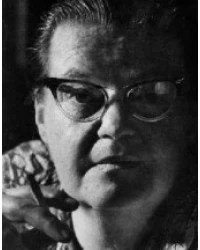
Hi, everyone! This week Mckenzie and I sat down with Katie, who runs the shirleyjacksonmemes account on instagram. We had a great discussion about hangsaman, as well as about the rest of shirley’s work. We talked a lot about katie’s scholarly interests, about academia, and finally about memes and internet culture. As always, you can find us on the web at readingshirleyjackson.com, and if you’d like to reach out to us for suggestions for things you’d like to hear us discuss, you can email us at shirleyjacksonpodcast@gmail.com. That was how we were able to get in touch with Katie, and she was a great guest, so enjoy this bonus episode and we’ll be back next week.
Kelly
And we are rolling. Hi, Mckenzie, how are you doing?
Mckenzie
I’m doing great. How are you, Kelly?
Kelly
I’m okay. The folks at home can’t see it, but we have a special guest. Katie, would you like to introduce yourself?
Katie
Yeah, absolutely. Hello, my name is Katie. I am an MA student at West Virginia University, studying literature. And I also run the Instagram account Shirley Jackson Memes, which is exactly how it sounds. Memes about Shirley Jackson. I’m interested in Jackson obviously, but I’m also interested in more broadly just the horror genre, women in horror, queer voices in horror, 20th century American literature, and film studies, so those are my academic interests. Oh, and also folklore.
Kelly
Cool.
Mckenzie
So Kelly, why don’t you explain how did you find Katie’s account and what do you like about it? What drew you to it?
Kelly
I had been aware of the account just seeing people post it on Twitter, but actually, the way I found Katie and asked to do her this intervie… well, actually Katie, would you like to tell it because you took the initiative?
Katie
Yeah. I actually posted on my story a few months ago: “I think it’d be really fun to be a guest on a podcast.” Because I like to listen to podcasts. My favorite one is called Evolution of Horror. I don’t know if you all are familiar with it. I can’t remember the name of the guy who runs it, but it’s just this podcast that does….it talks about each sub genre of horror film, and they do a season on each one, and they talk about pretty much any horror movie you can think of. and I like to listen to it a lot while l do chores or cook and stuff like that, And I remember I was listening to an episode of that and was like, “wow, I wish there was a podcast about Shirley Jackson that they could bring me on and I could talk about it, because it would be fun to be part of something like that.” So I posted it on my story and it ended up reaching Kelly.
Kelly
Do you know the horror homeroom podcast?
Katie:
No, I don’t.
Kelly
So one of the people who runs it, Dawn Keetley, she’s at Lehigh. She is one of the preeminent Shirley scholars, and she does a lot with folk horror. So I haven’t listened to many of their episodes, but I have listened to the one that they did on my beloved movie freaks, which I’m not going to talk about but yeah, so they’re a great horror podcast as well.
Mckenzie
Alright, everybody, so our podcast today is going to have three sections. We’re going to start by asking Katie about Shirley Jackson as a figure and we’re going to ask her about hangsaman as a novel in particular, which she’s done a lot of work on. We told Katie that we’re about halfway through the novel. We’re not going to spoil anything, but she might talk about the text as a whole. And then we’ll end with a discussion of internet and meme culture and the role of that within literary studies. So I’ll turn it over to Kelly to get us started on Shirley Jackson.
Kelly
So I guess before we get into the specific questions that I have, I’m just always curious. How did you first encounter Shirley, and what was the first thing you read of hers?
Katie
That’s a really good question. I think my first time encountering Shirley in any capacity was when I was younger. I can’t remember exactly when. I’m thinking middle school. in my literature class anthology textbook that we had, we didn’t actually read it in the class, but I remember the short story “one ordinary day with peanuts” was printed In it. And I don’t think I ever actually read it, but I just remember flipping through it and seeing it and just being vaguely aware of it. and then the first time I actually read something of hers was when I was 14 or 15. I read The Haunting of Hill House. My dad is a big horror fan and we have pretty similar tastes in books and movies and stuff in general. So he passed that on to me, and I read it and I enjoyed it, but it bounced off me a little bit. I think I was a little bit too young at that point to really get it. But I remember I read it and I enjoyed it. And then a few years later, I asked my dad for recommendations again, and he gave me the sundial and that one I think hit me in a way that hill house didn’t that first time, and I had never read anything quite like it. I was just completely like, “well, I didn’t realize books could be like this.” So I immediately of course needed more after that. So I moved on to we have always lived in the castle and that one was possibly even more life changing than the sundial. And then, that, I think sealed the deal for me, and I have been obsessed with Shirley Jackson ever since.
Kelly
So that leads us really well into the next question. What is the best Shirley Jackson novel, and why is it the sundial?
Katie
That is an excellent question. I love them all. I think it shifts. basically, depending on whatever day you ask me, I’ll have a different answer to this question. But I think most of the time I am falling on the side that it’s the sundial, just because it’s so underrated. it doesn’t get talked about, I think by Jackson fans even, and especially not by academia or culture as a whole. it’s just so under the radar, but it’s just a masterpiece. It’s hilarious. it’s very unsettling and dark. the characters are just so…you don’t love them, but you really just enjoy reading about them and their hijinks and interactions with each other. It’s just, it’s a great time. I love it.
Kelly
Yeah, I think of all her novels, that’s the one that’s most like “the lottery.” there’s what I call the impulse to annihilation. My favorite line in that book is, I think it’s aunt Fanny. She says, “the experiment with humanity is at an end,” and Orianna says, “splendid. I was getting very tired of all of them.” But I absolutely love the sundial.
moving on from that.. you know, it’s one thing to just talk about this stuff for fun, And then there’s wanting to do it theoretically for money, which is what academia is. So when you decided what your field was going to be, What drew you to Shirley? what made you decide, “I’m going all in with this,” or have you made that decision yet? Because it fluctuates.
Katie
I think I’ve definitely decided I’m going all in. I definitely have a reputation, at least among the people that I work with in my cohort and my professors, that I’m the Shirley Jackson person. And I think what draws me to writing about her work is that I don’t think it’s really gotten the due that it deserves as part of the literary canon. especially those lesser known texts. everyone knows “the lottery.” you can come up to pretty much anyone on the street, at least I would hope, and they would at least recognize the title “the lottery” and vaguely know what it’s about. And hill house has, I think, some broader recognition as well, especially with the show, even though it has absolutely nothing to do with what happens in the novel. but I think a lot of the lesser known texts like the sundial and like hangsaman and lots of her short stories, even like the bird’s nest, the road through the wall, even her unfinished, come along with me, those are texts that just have not gotten the amount of critical attention that they deserve, because they are all just incredible and they’re so dense and so rich, and that to me, is what draws me to writing about them.
Kelly
Have you read all the novels?
Katie:
I have. Yes.
Kelly
I’ve also never read the memoirs, have you?
Katie:
I have. Yeah, they’re very fun. I will say, at least from what I understand from reading Franklin’s biography and just all the biographical information, I know they’re not necessarily completely nonfiction. I think they’re more like fictionalized stories of her life. I don’t know if they paint a completely accurate picture of what was happening, but they’re very fun. They’re very funny. And I think they, again, they don’t get talked about a lot, and they deserve to be talked about more because they are a delight.
Mckenzie
Which, that’s almost more interesting. how would you fictionalize your life like that? it just feels so narratively and theoretically rich to know that they’re not true, About why she does that. And we talk a lot about mythmaking on the podcast. she mythmakes herself and so that’s such a cool part of that. Now I want to read them.
Katie:They’re awesome.
Kelly:
yeah, I haven’t read the memoirs. I’ve read a lot of the fiction that is hybrid. I’ve talked before about how my introduction was the story, “Charles.”
Katie:
Oh, I love that one.
Kelly:
Yeah. And my story is similar to yours. I encountered it in my seventh grade textbook, and I remembered the name Shirley Jackson. And then when I got to Hill House, I thought, well, Shirley Jackson is a pretty common name. This cannot be the same lady who wrote that cute short story, but of course it is. so I still have some ways to go with my Shirley scholarship.
Katie:
It’s a fun journey.
Kelly
So that brings me to my next question, which is, where would you recommend a beginner start? and when I say beginner, let’s imagine that this person has already read “the lottery”. So in the outside of lottery world. and no shade to that story, I do like that story, but in a lot of ways, I think it’s one of her least interesting.
Katie:
I agree.
Kelly:
just because everything has already been said about it. Anyway, no shade to “the lottery.” I’m sure I’m gonna get hate mail. But where would you recommend a newbie start?
Katie:
I would say that would depend on who the person is and what they want out of a book. but I would say, if I’m thinking just completely generally, maybe it’s a basic answer but hill house and we have always lived in the castle I think are probably the best starting points just because…And especially Hill house. I think it talks about a lot of themes that feel very relevant still today. I think Eleanor as a character, at least, maybe at least for me, maybe this isn’t a wide thing, that I find her very relatable and she feels very much like a whole person. you’re reading this book, and you can sense she had…you can sense that she’s had an existence before. the story starts and you can really identify with her and feel her emotions very strongly. And I think something very character driven like that is a good way to get someone into it. And then as well with castle as well with merricat. She’s just so fun. love her. And she’s just fun to read about. She has such a great voice. And so stories like that, where they’re so strongly character driven, can be a good entry point.
Kelly
It’s interesting that you say start there because those are right at the end, if you look at the long career. And I do think that’s probably true that Shirley was getting better as she was getting older, And then unfortunately, she was cut down in her prime. McKenzie, do you want to talk a little bit about your experience encountering Eleanor? because as far as I know, aside from “the lottery,” that is where you started, right?
Mckenzie
Yeah. So to give you a little context, Katie, I’m a gothic scholar, but primarily British. Kelly asked me to do this project, And so Hill house was my irst time reading it. and it wasa real luxury to read it, because we read it 15 pages at a time, and it’s really been one of the more meaningful reading experiences I’ve had, just because I think PhD is so much about quantity. I mean, my exam is right now and I’ve had to read 90 books in the past six months and it’s just constant getting to the finish line. So Hill house was fun not only because it was a masterpiece, but because it was a masterpiece we could really take our time on. I love hangsaman. I think again, I think it’s quite good, but I still don’t know how I feel about it.
Katie:
Yeah, I’m interested to hear your perspective.
Mckenzie:
but I want to do we have always lived in the castle separately because my research is starting to veer towards child psychopaths.
Katie
That’s so awesome.
Kelly:
there’s a child psychopath in the sundial, too, though.
Mckenzie:
Perfect.
Katie:
I love it. Yeah. I feel the Harriet Stuart stuff, And almost like Lizzie Borden here.
Kelly
we’ve talked a bit on the podcast about Shirley’s tendency to write, at least what I think of as mini versions of her longer stuff. For example, you’ve got “family treasures,” which is the story about the kleptomaniac, which appears again in hangsaman, and then you have “a visit”/”the lovely house,” which is a precursor to hill house.
Katie
That’s my favorite story.
Kelly:
So my question for you is, do you agree that you can see the seeds of hill house in that?
Kelly
Oh, 1,000% I think the main character Margaret is very much a proto Eleanor and that she has this weirdly deep connection with the House, and the story ends with her being subsumed into the house. And there’s like this almost like a mother daughter motif going on with her and the older Margaret that she encounters. I’m obsessed with that story. I actually just reread it the other day and in honor of shirley’s birthday because it’s one of my favorites. So it’s fresh in my mind.
Kelly
Can you tell the folks at home, maybe for those who haven’t read it, what the name of the family is in that story?
Katie
actually I think there’s a weird thing with that. I think in different printings, it was different.
Kelly:
I didn’t know that!
Katie:
I have it collected in come along with me. In that version, it’s rhodes, but there’s one little error where they forgot to change it. I think it was originally Montague.
Kelly:
Yeah, it was Montague. Because I have the collected Shirley Jackson and it’s Montague in there. we’re gonna talk more about Mrs. Montague later on.
Mckenzie:
So the rhodes – that’s so funny with all the driving stuff, right?
kelly
Yeah. And the road through the wall. In Shirley’s letters, she writes about how she was learning to drive in the process of writing hangsaman. So then the second part of that question is one, Do you…can you think of any other stories off the top of your head of hers that do that, where it’s a microcosm of something that later becomes a novel? And what do you think it does for us as readers to have those prototypes?
Katie
I think one example that is immediately coming to mind in relation to hangsaman is “the intoxicated.” i don’t know if you’re familiar with that one. It’s incredible. It’s in the lottery collection, And it’s a family holding a cocktail party and everybody is just getting drunk and doing what people do at 1950s cocktail parties. And one of the guests at the party goes into the kitchen and he meets the daughter of the family, and they’re working on her homework. And for her homework She’s writing an essay. It’s been a little bit since I read it, so all the details are fuzzy. But the essay is essentially about the end of the world, what’s going to happen when the world ends and they have this very interesting little conversation about education and the future and the end of the world. and I think it prefigures the younger woman/older man thing that we see going on in hangsaman with Natalie and her assaulter and then also Langdon, and I think the voice of the girl that we meet in that story does feel like a precursor to Natalie, and it’s a really, really great story. It’s very unsettling and it sticks in my mind. I think I read it initially years ago. I can’t remember when, but it’s always just stuck to me. I haven’t figured it out completely yet, I think but it’s a great one
Kelly:
Yeah. And it sounds like we’ve got some sundial too in there, with the end of the world.
Mckenzie
So, Katie, we talked a little bit about what draws you to Jackson. What draws you to hangsaman in particular? because you’ve done a fair bit of research on hangsaman, right?
Katie
Yeah. Hangsaman is actually very, very close to my heart. Actually, I don’t think the listeners will be able to see this, but I have my hanged man tarot necklace on right now.
Mckenzie:
Oh my gosh!
Katie:
I wesr it almost every day, but I had to of course wear it for this, but the first time I read it was my senior year of high school. And I think it was another case, like I said with Hill House before, of a book that bounced off me the first time because I wasn’t quite ready for it. I reread it my sophomore year of undergrad, And I think I was in a stage in my life that was very similar to what Natalie is going through in Hangsaman. I was living in a just God awful dorm with barely any light or windows, and I was starting to struggle a little bit more with some of my classes. I was taking math and science classes to get through my gen eds, and I was having a hard time with them. I was also just feeling like my mental health was not the greatest. All of my friends were in relationships except for me, so I felt very lonely. just having a hard time in general. So I picked up hangsaman again and I reread it, and it felt like I was reading my own thoughts on the page. I saw so much of what was going on with me through Natalie. it just made me feel like if Natalie’s story can end this way, maybe mine can too.
Mckenzie:
Yeah, thank you so much for sharing that with us. how would you characterize the writing Of hangsaman? and maybe you can put it into context with other Shirley writing. what is hangsaman doing in particular?
Katie
the thing that I like about it is that it’s very interior. I think a lot of Jackson’s writing is, and that’s why adaptations struggled to get her right. Because so much of what happens in these books comes from what’s going on in the protagonists’ heads, and their particular ways of seeing the world. And I think Natalie is almost a precursor to Eleanor in that way, where we’re just seeing everything through her filter. And I know ya’ll haven’t gotten to Tony yet, so I won’t get into Tony, but I think she’s a reflection of that as well. And I think there are a lot of little little lines that are just very snappy. I don’t know if snappy is the right word.
Mckenzie: Yeah. No, yeah. There’s a crispness.
Katie:
Yes. But they…just moments that when you’re reading it, you’re like, wow. she thinks about her future. is she going to be married with children? And to chase that thought away she, and this is a quote, “imagines the sweet, sharp sensation of being burned alive.” it just gives you such a clear picture into the very particular mental state that she’s in. And again, “sweet, sharp sensation,” just the alliteration that’s going on there.
Mckenzie
We talk a lot on the podcast, just by nature of having read hill house for our first season, we often put hangsaman in the context of a Shirley network. we’ve even done it in our conversation today. So Natalie is like Eleanor in these ways. Certain stories are a precursor to hangsaman and hangsaman is a precursor to other stories. I guess, what do we have to gain from seeing Shirley’s work like that, as a network or a web, and what might we have to gain from seeing texts individually, as individual works with their own merits?
Katie
I would say personally, the approach that I tend toward is the same as yours: seeing everything in a network because I think there are, as we’ve been talking about, so many moments, where there are these things that keep cropping up, and in the structural stuff that’s going on. And hangsaman and several of her other novels with the heaven wall gate structure, I think that has been a really useful thing for me to think about. That’s what I wrote my undergraduate thesis on. So that’s something that whenever I read one of her novels I’m hunting for.
Mckenzie:
tell us a bit more about that.
katie:
So I actually discovered this in a lecture that Jackson would give alongside readings from the sundial, actually. it’s called “about the end of the world”. it’s collected in let me tell you.
Kelly:
I’m holding my collection up
Katie:
nice. What she says essentially, when she’s talking about the sundial is…I’m gonna read what she wrote in her own words.
*Katie reads from “About the End of the World.”
And then she goes on to say, I won’t get into it too much, because that’s not the topic here, but the sundial she deliberately wrote as an inversion of that structure. to start inside the wall And so tell the story of characters trying to keep the world out of their wall. and I think hangsaman in particular is a representation of the structure in its original non altered form. it’s about Natalie and her quest to reach her heaven of becoming her essential self, and come of age, and grow up and realize who she is. And I think it’s an example of the original intent that she had with the structure, and that she plays around with it a little bit in the sundial, and then in her last two novels, especially in Hill House. I haven’t actually written on castle in that context yet. I’d like to in the future, but with Hill House, she reverts again to the original form of the structure where it’s starting outside the wall and going in. But the fact that she’s played around with it and picked it apart and figured out how it works by deconstructing it, and the sundial opens her up, even when she’s returning to the original structure in hill house, make it a little bit more complex and interesting, and subversive.
Mckenzie:
that’s amazing. Kelly, what do you think as a Shirley expert? is that something you’ve noticed? what interests you about that?
Kelly
I am not necessarily expert. I’m just somebody who has read a couple of things and likes to talk a lot. Yeah, I think that part of the reason why Hill House and castle are the most famous of her novels is that they are the ones that do the thing. What I mean by that is they are the ones that are very clearly a spooky old house, which the sundial is too, but the sundial in a lot of ways I think is even more depressing than Hill House, or is more existentially upsetting because the sundial is, spoiler alert, about the end of the world. but it’s interesting.I had never thought of taking the heaven wall gate And troubling it, because I’ve always taken Shirley at her word. “this is when I went in, and I had never thought about that before then.” And Hangsaman is a hybrid of that. And it’s interesting that you mentioned adaptation. I just finished an article for the Journal of Shirley Jackson studies about we have always lived in the castle. anyway, the reason I bring that up is because I forget which critics said it, but in one of the scathing reviews of the play, which to be honest, it deserved, somebody said that Shirley Jackson’s work seems pretty unadaptable, which I think has held true.
Katie
very much so. That is bizarre. I’m going to have to read more about that play. I will definitely be reading your article when it comes out.
Mckenzie
we’ve done a lot of thinking about hangsaman as autobiographical. It’s really difficult not to, right? It’s a campus novel. We know she lived on a campus for much of her life. A lot of the incidents mirror things she wrote in her journals And letters. But we’re also really cautious about it. we want to be careful. I guess, for you, what’s at stake in reading hangsaman autobiographically? Are there reasons we should resist that?what are the ethical implications for you about that?
Katie
Yeah, that’s a really good question.I think autobiographical readings are valuable in some places, especially with Jackson, because she has such a large body of letters and journal entries, and we know a lot from herself, in her own words, about what she was thinking about certain things that happened to her and just her life in general. in this past spring semester, I did a paper for a folklore class on Jackson’s demon lover stories, and I read them alongside the original James Harris “child ballads” that she was taking them from. And I looked at that in an autobiographical context to pick out, “okay, why is she interested in James Harris? Why did she use this ballad to make these points?” And one thing that I discovered when I was doing that, that I found very interesting is that Jackson’s mother, Geraldine, is the one who taught her the child ballads when she was younger.
Mckenzie:
Very cool.
Katie:
And then also her husband Stanley was a folklore scholar And he wrote a good bit about, folklore in general and ballads to a certain extent as well. And I think the points that she’s making in those stories through the use of James Harris and the folklore motifs play into the critiques she’s making against the institution of marriage and the institution of patriarchy and this idea that there’s a place for women only within the home. the fact that she’s using these ballads and this character that was introduced to her by her mother, who was very obviously critical of her choices, to step outside of what the expected role of a woman was. and then obviously, Stanley being… I won’t be too mean, but just not a great husband and not very, capable of seeing Shirley’s intent in her own writing and her ability to …the fact that she’s using this character feels particularly relevant to the critiques that she’s making of them in particular, so, can be very useful. But also, we have to be careful when we’re saying “this character is this.”, assigning things lone to one to things that happened in her life or people that were in her life can be a little bit questionable, and i think we should avoid that. But I am, at least in the case of Jackson, I am in favor of a taking a biographical approach because I think, like I said, we have a lot of information from her in her own words,
Kelly
I think maybe one of the reasons we tend to do that, especially since we’re living in the Shirley Renaissance, is that that’s the way the Franklin biography is structured. You know, everything is by what she was writing at the time and Franklin tends to point out, “this happened to Shirley and we see it happen here.” Speaking of ballads, in the episode that I’m editing now, which people will have listened to by the time this comes out, we talk a little bit about how much shirley loves to have Nursery Rhymes and fables and ballads in her stuff. And my very favorite thing that we found with season one was the murder ballad that Eleanor sings towards the end, called “the grattan murders.”. And it turned out, you probably know this, but it turned out that that was what Shirley would sing to her kids to put them to sleep. And when we found the video of … I can’t remember if it was Joanne or Sally singing it. So in the show notes for season one we have one of the Hyman daughters singing “the grattan family murders.”
Katie:
Awesome.
Kelly:
Which I thought was really cool.
Mckenzie”
And I feel like I’m at the point. As a scholar, where I’m trying to resist the shit that we were told was rules. you can’t treat characters like real people. You can’t read autobiographically, and I think that’s fine. those are interesting. But I’m really interested in resisting those as well. So, what if we thought about Natalie as a real person? why is that the ultimate faux pas in literary studies? Again, like you’re saying,, if we have something to gain from the points that Shirley was making in the context of her own life, why is that seen as rudimentary scholarship? So I thought that was a really good way of saying it that there actually is something to gain theoretically, as well. it’s interesting to read.
Katie:
Exactly. Yeah.
Mckenzie:
I think the paula jean welden is a perfect example of that where people are like, “well, it wasn’t really about that.” And it’s not, but she was also really interested in that case. And so, how can we put those things next to each other without saying this is the paula jean welden story?
Katie
Yeah, actually, you bringing up paula jean welden, that reminded me of the film Shirley with Elisabeth Moss that came out a few years ago.
Kelly:
*booing*
Katie:
And I think there have been critiques of that one because it’s not like a straight biopic. It does very much play fast and loose with the actual facts of her life, but I actually really enjoy it.
Mckenzie:
Kelly’s gonna fight you.
Kelly:
I unmutedI myself to boo. I’m sorry, continue.
Katie:
You know, I get why people don’t like it. And I absolutely understand that critique, but I read it more as if Shirley sat down and she wrote a story about a woman named Shirley, who was married to a professor named Stanley in Bennington. not her, some other woman who shared the name and the facts of her life. I think this is kind of what it would be like, I don’t think it’s exactly what it would be like. But, it’s very interesting also in the mythmaking context that y’all were bringing up earlier about, what do we think about Jackson as a cultural character? And I think it’s just it’s well made. I think the performances are really good, and I really liked the music actually. And I think the score is pretty. it’s a cool movie, and I think it does a good job of playing around with the biographical reading.
Kelly
So because I have come out so strongly as anti that movie, really my problem with it is that it goes for broke with the, “well Shirley was just unhappy because she was gay,” thing.
Katie:
Yeah, that’s understandable.
Kelly:
we know Shirley had a really fraught relationship with lesbianism, and she said a lot of not cool things about queer people, and I just resent any reading that boils it down to just, “this explains everything.”
katie:
Yeah, no, that’s a completely understandable criticism.
Kelly:
And I think it’s just…especially with somebody like Shirley, who maybe is still waiting for their day in the sun as much as she could have had it., i’s irresponsible to just boil it down to that.
Katie:
Yeah, tI get that for sure. Yeah.
Mckenzie:
but I think that’s a cool reading of it. I really like what you said about if Shirley were to write the facts of her life. I think that’s such a cool way to put it.
Katie:
Thank you. Yeah, no, that’s how I think about it because I am also a little bit frustrated by…one critique that I’ve seen of it is that when she was writing hangsaman she had children already. she was a mother, and that was a very important part of her life, which I don’t think should be erased at all. Especially because the cultural tendency to say “oh, once a woman’s a mother, she’s done, when she has children they take over her entire life” and to prove that women can do things when they’re mothers besides being mothers, and I think that is an issue with it. But for me, at least as long as I think that this is completely fictional, this is not about the real Shirley Jackson, I think I can appreciate it more as a film and for what it’s doing. I do think the marketing was a little off, because I don’t think it made it clear enough that it was fiction. But it is a really, really interesting movie. I actually need to watch it again. I haven’t seen it in years.
Kelly:
I will say, and again, I may have to edit this out because I may get flamed for it. The one thing I liked about that movie is it was the first time I was ever made to understand how Stanley was attractive, because I just… the pictures of him that I’d seen, the stories I read, I just… not at all. but I think it’s Michael Fassbender in that movie. No, not Michael Fassbender. I don’t remember, but whoever played Stanley
Katie:
Actually I’ll look right up right now otherwise it’s gonna bother me. Yeah, that’s so funny. I can see it. I can see it.
Kelly
Yeah, I think the reason probably why the kids are left out of that movie is because they’re all still alive.
Katie
Yeah, exactly. I don’t think I would want to be in a movie like that about my parents. So Michael Stuhlbarg played him.
Kelly:
so mixed feelings about that. All right!
Mckenzie:
So our last question for you, Katie. we’ve talked about so many short stories that relate in some way to hangsaman. That’s why it was so exciting for you to bring up “the intoxicated,” because there are even ones we still haven’t found yet. Do you have hidden gem recommendations for short stories?
Katie:
Yeah. one of my favorites is one that we talked about earlier. “a visit.” that one really sticks out to me because it almost feels like it’s taking place in a secondary fantasy world. the house that it takes place in is very much cut off from the rest of society. And once the main character Margaret enters, there’s this suspicion that she’s never going to leave. And just the prose has this general dreamy, almost surreal fairy tale kind of vibe to it. The descriptions of the house seem like this beautiful fantasy castle. Actually…this just popped into my head that I feel like it has always reminded me of the fairy tale The 12 Dancing Princesses, where the princesses are going through into their magical world and this room is all filled with gold, and this room is all filled with silver, and that’s what happens in “a visit.”
Mckenzie:
Oh, cool.
Katie:
so I think it’s the closest that Shirley gets to working in a pure fantasy genre. And I really really enjoyed that from her. So that’s one of my favorites. And then also I really enjoy “the beautiful stranger,” which is also collected in come along with me. I think that is, out of all the short story collections, for me that one is the highest ratio of just Absolute bangers. I wrote about it as well along with my james harris paper that I wrote earlier this year. it’s about a woman whose husband comes back from a business trip and she realizes that it’s not her husband, and it’s actually a stranger. And instead of being scared or upset, she’s happy about it.
Kelly:
Yeah, she’s like, this is great. I’m just looking through my collection Of The Collected Stories.
Mckenzie, and again, this episode is not released yet, but we were talking about “Island.” I’ve never read “island”, but my thing is medical humanities. So now I have to read it. But I took a class during the pandemic, actually with Ruth Franklin. And we did the sundial, and there was this person in the class who said, “I didn’t like it, nothing happened and the characters were shallow.” which is essentially the sundial, but the reason I bring that up is because it was really interesting to see the stories that she picked as emblematic. one was “a visit,” one was, “Louisa please come home.”
Katie:
Oh, that’s a great one. That’s one of the greatest hits.
Kelly:
Yeah, we did “the summer people,” which…I’m not crazy about “the summer people” . We did one that I had never heard of, “the bus.” You know that one?
Katie:
Oh, I love “the bus.”
Mckenzie:
Tell us about “the bus”
Katie
it’s about an old woman who is taking a bus and she falls asleep on the bus. And then when she wakes up, she gets ushered off the bus to this little hotel that she wasn’t fully expecting to go to, and there’s weird, sinister people in this hotel. And she a fantasy about returning to her childhood and it’s very unsettling, weird, nightmarish vibes. And then she wakes up from this nightmare that she’s had, and then she’s being ushered off the bus again into the same hotel. It almost seems like it’s in this never ending, Nightmare time loop of the same situation over and over again.
Mckenzie:
That’s very cool.
Kelly
I will say the reason that that story gets to me so much is because of the SpongeBob “rock bottom” episode.
Mckenzie:
You talked about it on the podcast.
kelly:
The level to which that fucked me up. I’ve never been able to recover.
katie:
I know you said you had been writing about Jackson and race recently, but I really enjoyed “flower garden” as well. That one is one that I don’t think gets talked about enough and it’s very…, I think it might be controversial to say, but I think it does some of the same things that “the lottery” does In a more interesting, unexpected way.
Kelly:
Yeah. Yeah. For that article, I wanted to make sure that there was nothing I was missing. So I basically combed as much Shirley stuff as I could find. And there are two stories in the entire body of work where somebody is explicitly black. One is “flower garden,” And then the other one is a life,sketch, although Not really, called “after you, my dear Alphonse.”
Katie:
That one’s really interesting as well.
Mckenzie
So we’ll turn the discussion over to meme culture, which is obviously a big part of what Katie does, at least in your free time on Instagram. And we thought we’d start by sharing our favorite memes from your account. So the first one is a tweet. “there’s a forest in Vermont That feels nihilistic,” and then the retweet is hangsaman1948. That’s very funny. And then I love the Bernie/Eleanor, “I am once again asked him to come live in your house.”
Katie:
I remember both of those. I’m very proud of both of those. The Hangsaman one actually, I can’t even remember what account that was, but I followed it. I don’t know if it’s still active. But that just came up on my Twitter feed and I was like, that sounds like hangsaman. So I just quote tweeted it and then I posted it to my Instagram page. honestly, that’s how I come up with things. I just see things out in the wild That make me think of Shirley Jackson and then I bring them to my page.
Kelly
Were you surprised by how your account took off?
Katie:
I was yeah, I honestly I made it…I think it was like four years ago now. Yes, it was in 2019. And I made it because I had seen other literary meme Instagram accounts, but they were all very much targeted and based on high school classic literature that everyone has read, like Great Gatsby, Shakespeare, stuff like that. And I would see things and think why don’t they make stuff about Shirley Jackson? Because her work is hilarious. And I think it has lots of potential even in the less funny parts to make jokes about it. And I was just surprised that nobody had ever done it before. So I just started doing it myself. And it took a little bit to get to the point that it’s at now. But I think I’ve definitely been steadily building up a community over the past four years, and I’m very happy with where it’s at now.
Kelly:
That’s so cool.
Katie:
People that are there… it’s really cool to have people to talk about Jackson with, because I think a lot of the time, even in academia, even in communities of people who like to read and like books, Most people haven’t really done a deep dive into Jackson. they probably know “lottery” or hill house or castle maybe, but people don’t know what you’re talking about when you talk about hangsaman. Yeah, it’s cool to find people that do.
Kelly
I have two favorite memes. One is a picture of nell and Theo from the haunting and it says, “Happy Pride Month to these two and their bullshit.” And then the other favorite meme is for a very, very specific reason that nobody’s gonna care about but me. It’s not a meme template that I’m super familiar with, but I’m going to hold it up. So it’s the two cars and so it’s Mrs. Montague, and she’s pointing to the scientific method. She says, “the scientific method. This is brilliant,” and then she points to planchette and says, “but t like this”. I love this for two reasons. One is if you listen to our first season, one of the hills I’m willing to die on Is that Mrs. Montague is awesome.
katie: I am 100% with you there.
kelly
She gest responses from the house that nobody else can get. But the other reason why I think that this is a wonderful meme is because the building in the background is Livadia palace in the Crimea, which was the favorite home of the last imperial family of Russia, which is my other major love aside from Shirley. So a very nerdy niche reason.
Katie: Oh, cool. Yeah, I had no idea about the house. I just saw somebody else post it in that format and I put my own spin on it. That is a deep cut that is from several years ago. So I am impressed that you dug that one up.
Kelly
So we’ve talked about hangsaman, we’ve talked about Shirley in general, we’ve talked about your career as a memer. So I guess I’ll ask you the nerdy question, which is, what do you see as the role of the internet in literary studies? And this is all something that we are now having to deal with. And I don’t just mean in terms of chatGPT
Katie:
Yeah. Yeah. I think that’s a really good question. I think that is something that’s becoming increasingly relevant, and these past few years, for me and the way that I personally use it, and I think, the way that I find utility in the internet is that it allows you to connect with people in ways that you can’t without it. You can reach out and find people who have the same niche interests as you do. I mean, that’s how I found this podcast to get on it. So that was really cool. And I think it allows you to communicate with people in a way that you wouldn’t ordinarily be able to. this is gonna sound like a humble brag. I promise it’s not. Carmen Maria Machado actually follows my account.
Kelly:
Really?
Katie:
Yeah, and she shares my posts sometimes. Ruth Franklin does as well. writers that I really admire follow me, and I never in a million years did I think I would be sending Instagram DMS to Carmen Maria Machado. And I think it’s really cool to give people a chance to connect with people that they would not have otherwise met. whether it’s for reasons that they’re across a big geographic distance, or they just you just wouldn’t have ordinarily crossed paths because maybe one person in academia one person is not that interested in going into academia, or is not interested in it at all, that we all have common interests. So I think the internet is a really great tool too. might sound a little cliche, but just to bring people together.
Kelly
The entire reason why I started this podcast is because I am bad at arguments. I am not good at finding a text and saying, “gI am going to prove to you that this is true.” I am much more, “just wander around and point out things that I think are cool.” That was what gave me the idea to do the podcast. before you hopped on the call me and Mckenzie were talking a lot about, the who’s in and who’s out of academia. Something that anybody who’s in the game will tell you is that this is not a fair field, and what I mean by that is it is not economically viable. And it’s also, because it’s not economically viable, It disadvantages people who don’t have the money.
Katie:
Absolutely. Yeah.
Kelly:
And so I was wondering if you could talk maybe a little bit about your demographic and how many people are in academia, If you know those numbers?
Katie
Yeah. Well, I mean, I don’t have exact stats on that. I know, occasionally, like I will. one thing that I really enjoy about having ..it’s not like a gigantic platform, but having somewhat of a larger platform is that if I have questions about stuff…actually a few weeks ago, one of my final papers that I wrote this semester was on Jordan peele’s movie, nope. One of my very favorite movies, and I was looking for sources that I could use for that paper. So I just put a message out on my story like, “Hey, does anyone have suggestions for sources about this topic?” and I got a bunch of responses. it’s a great little extra the toolbox that I have when I’m researching and looking for sources on stuff. And other times, this semester, I’m working on PhD applications, and I’ve gotten responses from…I’ve asked questions about …I actually asked, “should I put this meme account in my CV?”
Kelly:
And what did people tell you?
Katie:
I got mixed responses. I think most people, and that one specifically, I asked for l people in academia because [I wanted] people who have an informed perspective on this instead of people who are just along for the ride. But what people said generally is that it depends on the school that you’re applying to, and if they are a little bit more formal seeming, and a little bit more traditional, I guess it’s Probably not a good idea I mention it, but if they’re more interested in innovation and doing new things and embracing technology and the internet, it’s worth doing. and I did do it for a few of them. We’ll see if I get into those schools that I mentioned this account to!
but I think at least from that, and from the questions I’ve specifically asked, “this is specifically for people in academia,” I would say there’s a significant minority of people in academia that follow me, but I think it is a minority. I think there’s a lot more people who are just readers and fans of Jackson in a non academic capacity. And like I said before, something that’s cool about it is that it brings these two kinds of audiences together, because I started the account initially as just something fun, you know, as a reader and a fan. But as I have progressed through academia and started grad school, I have been taking advantage of it more as a tool for helping me get through my own research. In the future, I definitely am interested at some point in writing something about meme accounts, and their connection to literary studies and the internet. I don’t know what my argument would be or where I want to take it, but it’s something that interests me, and I don’t think it’s something that has been written about yet, to my knowledge. maybe it has and I’ve never looked into it, but I think it’d be fun to write about.
Mckenzie
I think the meme is one of the greatest linguistic evolutions and creations of the 21st century. I just think it’s really amazing you actually think about it, and so I’d be really interested in that article. what does a meme do and what does it do When we put it in conversation with narrative?
Katie
it’s interesting because like I said before, there’s a lot of literature themed meme accounts out there, but I think a lot of them, and especially the bigger ones, they don’t really make a lot of original content. They just take screenshots of tweets and Tumblr posts that are years old. But as somebody who’s creating my own original content for the most part., it’s interesting to see how that compares to the other accounts. I guess I’m aiming for a wider audience, And posting more different kinds of things that I have a very specific niche. and I think I’ve reached the people that I’m trying to reach, which is awesome, But I think also, audiences are really interesting to think about, with the internet and Who are you trying to reach? Who do you reach even without trying to? the motivation that you have to keep posting?
Kelly
Yeah, yeah. Which, honestly, for me has been a wonderful thing about the podcast, because in academia, you’re essentially talking to nobody.
Katie:
Yeah, exactly.
You’re talking to the three other people who do what you do, who may someday read this article. So Mckenzie, do you have any other questions?
Mckenzie:
I am set. This was so wonderful. Kelly, do you have any Final follow up questions?
Kelly:
Yes. One, you mentioned Carmen Maria Machado earlier. Something that Mckenzie and I were discussing before you hopped on is another thing which I feel very strongly about because I have many strong opinions. But I feel like Shirley is somebody who gets talked a lot about in terms of heirs and heiresses. “This is the next Shirley Jackson,” which of course there can never be, but is there anybody or any texts maybe that you would tap for that position?
Katie
That is a really tough one. I don’t think you can say there is a next Shirley Jackson, ‘cause there’s only ever going to be one of her. There’s only ever one of anyone. But I think writers that are currently working that I get Shirley vibes from to a certain extent? Carmen Maria Machado is definitely there. she’s definitely, especially and she did a short story in the when things get dark collection that came out a few years ago that was a take on hill house and the cup of stars line that I thought was really great. also another writer that – actually I have the book right here, let me grab it. Another writer that is very explicitly in conversation with Jackson, even though she’s doing very different things, is Alison Rumfitt’s book tell me I’m worthless. it’s really good. It’s not tonally like Jackson at all. But it’s about a haunted house and it talks about fascism and transphobia in the British context through this metaphor of a haunted house. It’s really good. I enjoyed it a lot. And there are some parts where she is taking off on the opening paragraph of Hill House. With the, “no live creature can exist sanely under conditions of absolute reality,” that she plays around with which is cool. She also follows my account, which is really awesome.
Kelly:
Have you read the Elizabeth hand?
Katie:
No, I haven’t. I’m actually really scared to, because I’m very emotionally attached to hill house and Eleanor. that’s why I have such burning hatred for the Flanagan TV show.
Kelly:
me too. So I’ve talked about this before. full disclosure, I’ve not watched it. But I think a lot of my rage towards that tV show comes from having taught Hill House so many times and having to contend with the people who were like, “Eleanor’s Brother Luke…” Yeah, that’s my rage towards Netflix.
Kelly
And my final question, which Mckenzie, I would like you to answer too. You are in a life and death situation. You have one Shirley Jackson character Who you can choose to assist you. Who are you choosing?
Katie:
Oh, I’m gonna have to think about that. But it’s rough. Because i’m thinking about my favorite characters, And I don’t know if they’re the ones that I would want with me in a life or death situation.
kelly:
Eleanor would be useless.
Mckenzie:
I need a more specific life or death.
kelly:
burning building. Elizabeth langdon?
Mckenzie:
i mean, she has a track record of putting out fires.
Katie:
Very true, very true. I was gonna say merricat Because she probably started the fire. She’d helped me get out of there.
Kelly:
I can tell you my answer. Fancy Halloran.
Katie:
Oh, that’s a good one.
Kelly:
That’s the psychotic kid in the sundial and
katie:
An icon.
Kelly
Yeah, she’s, she’s terrible. And she probably kills her grandmother. But yeah.
Mckenzie
I have my answer and it’s a hot take. I don’t remember his name. Mrs. Montague’s lover.
Kelly and Katie:
Arthur!
mckenzie:
And here’s why.
Kelly:
He’ll shoot the fire with his gun?
Mckenzie:
he does sport. He (obviously this is bad,) but he views women as weaker,but also he’s very easy to manipulate. So I would just be able to boss him around and be like, “get me out here.” and he would do.
Katie:
that is very well thought out.
Kelly
See, I have no faith in my own ability to escape a burning building. So I would want somebody who would definitely know what to do. So yeah, I’m going fancy. What about you, Katie?
Katie:
I am still processing that. You know, I think I’m gonna go… have either of
Katie
y’all read the birds nests?
Kelly:
Yes! “Elizabeth, Beth, Betsy and Bess, they all got together and made a bird’s nest.”
Katie:
YepI’m actually in the middle of rereading it right now. I had to set it aside because I had too much other stuff to do. But now that I’m done for the semester, I’m going to dive back into it, and I’m going to go with Aunt Morgen because she knows what she is doing. She is a badass. she’s iconic. I love her. Yeah, she definitely is in the Verna Mrs. Montague almost like Aunt Fanny archetype, the older woman who is a little eccentric, but still lovable.
Kelly
So, where can people go on the worldwide web If they’d like to find out more about you and your work?
Katie
well, I would say the best place to follow me is my Instagram, shirleyjacksonmemes. I don’t really have any other public social media accounts. I prefer to keep my personal life private. But, if you want to see me talk about Shirley and post silly memes and post pictures of my cat sometimes, You can find me on Instagram at shirleyjacksonmemes.
Kelly: Thank you so much, Katie.
Mckenzie:
It’s been a pleasure talking to you.
Katie:
This was a blast!
 reading shirley jackson:the podcast