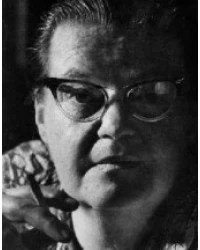
“the maid freed from the gallows” performed by john jacob niles
hangman, hangman, slack your line
slack it a just a while
‘for i think i see my papa comin’
traveling many a mile
traveling many a mile
kelly:
welcome to “not in her own house”, season 2 of reading shirley jackson: the podcast. this season, join us as we explore the world of jackson’s second novel, hangsaman.
mckenzie:
hi, everybody. welcome back to the reading shirley jackson podcast. i’m mckenzie.
kelly:
and i’m kelly, who is dressed for radio today.
mckenzie:
it’s earlier than we usually record. it is the wee hours of 9am.
kelly:
but you know what, as the great stephen sondheim said, “art isn’t easy.”
mckenzie:
nice. thanks, steve. so hi, everybody. the first thing we wanted to say is thank you so much to our continued listeners and also to our new listeners. we had a huge spike in listens since releasing our podcast on october sixth, and we’re really excited to see people picking up where they left off. any listen feels like a miracle, to be honest, so it’s really great to have you all here. and you know, we hope you stick around.
kelly:
so once again, you can visit us on the web at readingshirleyjackson.com. we are still in the process of uploading old transcripts and show notes because, as i said last time, websites are hard. so check us out on the web. we are growing all the time. the only thing that i’ve been neglecting is our twitter. so apologies if you follow us on there. it’s @readingshirleypod. i’ve been inactive, but i’ll fix it.
mckenzie:
kelly, how’s this semester going?
kelly:
every semester, there comes a point where the most viable option seems like faking my own death, and every semester that point comes earlier.
mckenzie:
yeah. god, week six.
kelly:
i thought it was like week eight.
mckenzie:
is it week eight? i think it’s week seven, actually, because last week was week six for midterms.
kelly:
okay, how’s your semester?
mckenzie:
it was just my birthday. i love my birthday. i think it is magical. i live in connecticut, so my fiance and i went to the gilmore girls town, which is washington, connecticut, and they were having the cutest little harvest festival, and it was just divine.
kelly:
was it very obvious that people were there because it’s the gilmore girls town?
mckenzie:
well, so i think that the town is sweet because i think some towns would be like, “no, we’re not doing this. we’re not only the gilmore girls town,” and they are. like the bookstore i went to had a gilmore girls sign, and there was a qr code for the gilmore girls scavenger hunt or a reading list or something. and so i think it’s actually cool in that way. it’s the hickory stick bookshop in washington, connecticut, and they were great. they were super nice, had a great selection. but then what i thought was cool about the harvest fest was that it actually seemed like it was for the people of the town. for example, there was a scarecrow competition and one of the scarecrows must have been a local man because it was like “joey and blip, his dog” and it was a town man and his corgi. it was really sweet that the prom committee was there and the firefighters and emts were there and so it felt like a town event that we got to go to and that we were certainly welcome at, but it wasn’t super touristy
kelly:
would you like to hear one of my cancelable takes?
mckenzie:
yes.
kelly:
i hate gilmore girls.
mckenzie:
that’s not cancelable.
kelly:
i just hate it.
mckenzie:
yeah, it’s just wired my brain. that and twilight i just experienced at an age where it’s too late to go back.
kelly:
gilmore girls … the thing that grinds my gears, as peter griffin would say, and i’ll also quote peter griffin and say, “it insists upon itself.”
mckenzie:
yeah, that’s certainly true. and it insists that everyone else thinks that it is as charming as they do, which i do.
kelly:
biscuit’s meowing upstairs. i edited him out last episode, but maybe he’ll make it in this time. do you want to tell the folks about your conference?
mckenzie:
yes, i went to a conference called the victorians institute in north carolina. i flew down saturday morning and then flew back saturday night, which was very cosmopolitan of me. i was very excited about that. if i said that in the last episode, just edit that out, because i keep saying it.
kelly:
you didn’t say it.
mckenzie:
it was really wonderful. i met two friends and i almost never… it wasn’t really networking. it was really just people i liked talking, to but i often feel very shy at conferences, or i go with a friend and then i just hang out with them the whole time. and so it was really nice to go. it was a very tiring day and i really didn’t get to see much of north carolina, but it was cool.
kelly:
i’m gonna go out on a limb and guess you didn’t miss much. and thus we lose the entire state of north carolina.
mckenzie:
both my uber drivers were like, “i know a lot of people from connecticut who moved to north carolina.” they were selling me north carolina, trying to get me to move there. they were like, “we don’t get natural disasters. it’s great weather all the time.” they kept being like, “no blizzards.” i actually like the snow. but i think to them, that seems apocalyptic.
kelly:
here’s the thing, pal. i’m not from connecticut, i just live here, so i assure you, i am not moving to north carolina. anyway, moving right along into the next 20 pages of hangsaman, and folks, this is going to be a rough one. so content warning.
mckenzie:
as we mentioned, this whole season is really going to contain a discussion of sexual assault. but this episode in particular is going to discuss the actual occurrence of that. it’s not on the page, so there’s no graphic depictions, but it will be discussed, and it is really upsetting and unsettling, and so as always, if that’s not something that you can handle today, please take a break, or join us next time. that is going to be a theme throughout the season, but especially today.
kelly:
can i just say, as someone who has read a fair amount of shirley — i’ve not read everything. but this…really, i didn’t know that she was capable of doing this. and i don’t mean that in a deriding her talent way. we’ll talk about it more as we get there, but she’s usually very restrained. everything is usually buried. it might be because this is earlier in the career, but i was really surprised by how explicit she made it. and it’s not graphic, but it is more on the page than i was expecting. so we’ll talk about that when we get there.
mckenzie:
so before we jump into the text, though, kelly asked about tarot last time and we didn’t really have a lot of space for extra context, but i thought we’d start with that this time. okay, so the reason that tarot is significant for hangsaman is that number one, it appears in the book itself, not in these pages but in the later sections, and number two, “hangsaman” is seemingly an allusion to the hanged man, or one of the cards in tarot. so to give a little bit of background (which i didn’t know any of this, by the way, before looking it up.) so tarot refers to any set of cards used in tarot games and in fortune telling. so the original tarot decks were invented in italy in the 14th and 15th centuries, and they were originally used for games. it was a game known as alternatively trionfo , which is triumph, or torracoo, which is where the word tarot comes from, which means “fool,” and there’s one fool card. so there’s four suits. it’s 78 cards total. and then there’s the major arcana cards, which are those 21 trump cards and the one fool card and are also the cards that we think of as tarot cards like the hanged man, the empress, you know. and then there are also the minor arcana, which are 56 cards and those represent more of a standard deck of cards. the adaptation of tarot to fortune telling purposes occurred in france in the 18th century. a french occultist called john batista alette, also known as atella, published the first guide to tarot card reading, using it as a tool for spiritual growth. he also lied and said they were related to egypt. there’s a lot of occult false links to…
kelly:
orientalism.
mckenzie:
yeah, orientalism or other kinds of civilizations, to give the fortune telling aspects of them more authority, and it was really just invented by a french guy 300 years ago.
kelly:
we see you, john. we’re exposing you on this podcast.
mckenzie:
at least i think that’s really interesting, because i definitely assumed there was a genuine cultural background to tarot, and not just a european narrative that was invented. i still think they’re very cool. i don’t necessarily subscribe to fortune telling, but i think it’s a really interesting way to think about life and to think about telling a story about where you want your life to go. and so i think that’s really cool.
kelly:
another cancelable take. you know what i think is such bullshit? when people do tarot readings on tiktok.
mckenzie:
yeah, i do too. i hate anything that’s like, “this found you. i have six videos, and if this is the one that finds you, this is one you’re meant to see.” no, it’s not. i’m just a math equation. anyway. so the hanged man is the 12th card in the deck. so for those of you who don’t know, cards mean different things when they are revealed upright or reversed. first, upright the hanged man can mean pause, surrender, letting go, new perspectives or sacrifice. and we definitely see this with natalie as she’s preparing to let go and enter a new perspective. reversed it means delays, resistance, stalling or indecision, which i think we can also see in her. you mentioned that you didn’t think that natalie wanted anything, and so to signify that as well. kelly, do you know anything about shirley and tarot?
kelly:
my impression is that it’s one of those things that has been sort of added to the stuff of what we think of when we think of shirley jackson more than it was in her actual life. is that right?
mckenzie:
part of what’s interesting about that perspective is that she participated in her own mythmaking, like we talked about last week.so it’s actually in one of her author bios.
kelly:
is it the same one where it says she’s a practicing witch?
mckenzie:
yeah, so it says… this is her other author bio for the road through the wall, which is her first novel. yeah, it identified her as “perhaps the only contemporary writer who is a practicing amateur witch, specializing in small scale black magic and fortune telling with a tarot deck.” so she loved tarot. she got her first deck of cards when she was 19, and she would read it for friends and family; she would even go to bennington college and dress up and read for students, which i think is very sweet.
kelly:
there are probably people still alive who will remember that.
mckenzie:
ruth franklin actually interviewed somebody.
kelly:
really?
mckenzie:
yeah, i can link it in the show notes, somebody who had a reading by her, which is really cool. also, do you know where i found this information, besides just the book?
kelly:
where?
mckenzie:
ruth franklin’s tumblr.
kelly:
really?
mckenzie:
i was a big tumblr girly and so it was just a delight to be back there. she was giving a lot of updates on shirley. so she really preferred the italian deck, known as the deck of marseille, which i know is obviously ironic that it’s italian and has marseille in the title, versus the french deck. and another interesting fact that i actually hadn’t found last week is that natalie waite’s name is inspired by the rider-waite tarot deck. yeah, arthur e. waite, who was an occultist who wrote the tarot guide in the early 20th century.
kelly:
we mentioned that last season, i forget which episode. probably one where we talked about the tower. also, there’s an arthur in hangsaman and in hill house.
mckenzie:
i know. so the last time we were with natalie, she was doing something interesting in the woods. kelly, what was she doing?
kelly:
she wasn’t in the woods, she was in the garden, and that’s gonna matter later this episode. so she’s rolling around calling them her sisters, and as i said last episode, which was a lot of fun to transcribe, she’s basically like “ahhhhhhhhh.”
mckenzie:
and she’s zapped out of this emotional, natural reverie when she sees her brother. kelly, could you read that for us?
kelly:
sure. can i also read the last part of the section before?
mckenzie:
yeah.
kelly:
i think that’s so cool. i talked about this last week, but that section before ends…
*Kelly reads from page 24*
mckenzie:
why does she really make that connection between them – natalie saying, sister sister,” and then seeing her brother, who then goes on to call her, “nat? nat? nat?” so it’s that doubling.
kelly:
the answer is i have no idea, and this got me thinking about siblings in the work of shirley jackson. there are siblings everywhere: there are merricat and constance in we have always lived in the castle. there are the sisters in hill house. it is very rare that we have a brother/sister pair, and i think it’s interesting that she constantly reminds us how much they look alike. i don’t know what that portends.
mckenzie:
i wonder if this is because it feels like her most autobiographical work, that she wanted that brother sister/dynamic. we talked about that last week where her brother was an easy, breezy, beautiful cover girl and she struggled a bit more, especially in her relationship with her mother. but i think what’s sweet about this section is there doesn’t seem to be resentment here. there’s some tension regarding their family dynamic that they share, but they’re not rivals or enemies, and they’re not even neutral towards each other. there seems to be a genuine kindness. so could you read us that scene between them?
*Kelly reads from page 24-25*
mckenzie:
she reminds us three times how much they look like. almost overdoing it. yes, we get it. so what’s happening here? why does she keep reminding us they look alike? is it something about seeing yourself in another person, or that realization of selfhood that she was talking about last episode, where she just realized she’s a self and now maybe she’s just realizing bud is a self?
kelly:
i think it has a lot to do with what’s about to happen, and we’ll see at the end of this episode that there’s a scene where natalie is looking at herself in the mirror after she’s had this terrible encounter. and so i think bud is sort of the tabula rasa. he is what could have become of natalie but does not. and this is really the decision where they fork away from each other. he goes swimming and i think it’s really interesting that he says to her “you want to come? you want to or not?” and she says “i don’t know.” i talked last week about how i can’t name a single time in the text so far natalie has wanted anything, and i think it’s really really significant and really really ominous. “‘well, you want to go?’ no, i guess dad wants me to stay.’”
mckenzie:
yeah, i’m also brought back to the hanged man. so the reverse is delay, resistance, stalling, indecision, versus surrender, new perspective, sacrifice. so when you put it in that context of this [being] the moment that really the rest of the book and the rest of natalie’s life hinges on, bud is trying to get her to come with him, almost like he knows something bad is gonna happen. and it’s him letting go of her, and also natalie letting go of her old life. this action ominously ends with bud saying, “better hurry, they’ll be here pretty soon.” this “they’re coming” mentality, that of course is ominous once we know what happens but feels comically ominous in the moment.
kelly:
one thing that really, really struck me about the pages that we read for today is… maybe i’m just a callous person, but even when people die in shirley jackson, it never feels quite consequential. it always feels like these people are moving around in a dollhouse, and one of the dolls drove into a tree and died. hill house spoiler there. even when merricat blackwood takes out her entire family, it is on some level played for laughs. what this passage really made me realize, and this whole section that we’re going to read for today, is how quickly shirley is able to switch from comedy to absolutely nothing is funny. and in fact, not only is it not funny, but things are very, very scary. so it’s almost as if we’re led down the primrose path and then the door is locked behind us and we’re stuck.
mckenzie:
yeah, that reminds me of the scene with her mother that we’ll encounter, which is almost like a blend of them both. it is funny that her mother’s reclining and like, “oh, my life,” and then natalie’s like, “should i bring out the cheese?” but at the same time, the details of her life are genuinely horrific and tragic and unavoidable.
kelly:
we’re going to talk later on about how i have to make a retraction regarding mrs. waite, but we’re not there yet.
mckenzie:
okay. all right.
kelly:
so, party time.
mckenzie:
so natalie comes back and is hanging with mom and pop. the vibes are not great. kelly, can you read us the atmosphere in the waite home as they await the party?
kelly:
so this is on page 25 of the penguin edition.
*Kelly reads from page 25*
mckenzie:
what do you think?
kelly:
so there’s one episode last season where i talked about just how much shirley likes adverbs, and i see that that was something that has been persistent throughout her career. the word that tipped me off at the beginning of this passage is the ice is freezing “dutifully” in the refrigerator. this is straight out of hill house, and i should put that on a t-shirt. straight outta hill house. “the floors met neatly. doors are sensibly shut.” so, in hill house, we have this idea of obsessive order, right? everything is exactly as it should be, and this is something that appears again and again in shirley’s work and we have it here with mrs. waite. we cannot, of course, neglect to talk about the books on the shelf. now this was something that i requested be added to the episode because i wanted to talk about the function of the orgasm. buckle up, folks, because it’s going to be insane. so the first thing that i want to talk about with this paragraph has to do with ulysses, which for the record, i absolutely love. i know we’ve talked about ulysses a lot. what is your position?
mckenzie:
zero. i have not read
kelly:
okay,
mckenzie:
nor will i, i think ever. so i mean, i might. i shouldn’t say that. but some books, you’re just like, “i have so many books and i just don’t care about that one.”
kelly:
so once again, every chance i get i will shout out blooms and barnacles podcast. i love it, which actually was the inspiration for this podcast. so you have ulysses to thank, but shirley did not like ulysses. so this is from a letter she wrote to her friend/fan jeanne beatty in january of 1960. “mystery stories i read all the time, and stanley gets furious because he is always reading something like ulysses [in all capital letters], which i frankly regard as a great bore.” so that is our first hint that this bookshelf is making fun of stanley. then of course, we have the function of the orgasm. so i had never heard of this, but a little bit of googling revealed that it is a german book published in 1927 by wilhelm reich, which is the most german name ever. and in fact, wilhelm reich was a big freud fan, and so he gave this book to freud for a 70th birthday present, and freud did not care. anyway. so the entire gist of this guy’s career is he spent his whole life trying to figure out what an orgasm was. i don’t mean that in the way it sounded. but he had all these theories – is it electricity is, is it a buildup of fluid? so you can see where this guy would have been taking his cues from freud, but eventually he split from freud. however, the function of the orgasm was before that. so he has this idea that all neurosis, aka all mental illness or neurodivergence was linked to orgasmic impotence. he basically contends that all mental illness is a result of what he calls “severe genital disturbance.” and in light of what happens to natalie, yikes.
mckenzie:
can i ask a follow up question?
kelly:
yes.
mckenzie:
i have two follow up questions. number one, is orgasmic impotence or severe genital disturbance… is that too few orgasms or too many orgasms?
kelly
it is the inability to reach a satisfying orgasm. and the wikipedia article was very specific to say that it’s different from anorgasmia, which is the inability to have an orgasm. he is very concerned about the…
mckenzie:
this is a pg 13 podcast, you can say it.
kelly:
the potency, he’s very concerned about orgasmic potency… orgastic potency? he has some phrase, it’s like orgastic potency. so wilhelm, you are remembered but jesus, dude, you’re a weird guy.
mckenzie:
wait, i have a second follow up question.
kelly:
yeah.
mckenzie:
neurosis is often linked to women.
kelly:
yes.
mckenzie:
is he interested in his orgasmic impotence? does it affect everyone equally? or is he specifically interested in female neuroses?
kelly:
so he’s interested in everybody equally.
mckenzie:
okay.
kelly:
one thing that we can give him props for is he’s not…i’m sure he is sexist. but the wikipedia article does not make him sound sexist. he cared very much not only about males reaching their full potential orgasmically, but females as well. and can you imagine? just, “happy birthday, sigmund. here you go.”
mckenzie:
i was literally just thinking that. i would pay any amount of money for a portrait of freud at a birthday party. i’m imagining him with a little hat and a little cake. and then it’s just, “here you go, sigmund. i think you’ll really enjoy.”
kelly:
freud didn’t. he hated it. it’s very clear from these books that shirley’s making fun of these guys, but she’s making fun of them in a way that is particularly sexual. and honestly, i never expected to see the word “orgasm” in a shirley jackson novel. i wrote in my article about how the characters in shirley jackson are little dollhouse people. nobody votes in shirley jackson. they are civically disengaged, but they’re also pretty bodily disengaged, right? one thing that i was very, very surprised about, and we’ll see it later on, is mr. waite tells a story about natalie pooping on the lawn. nobody goes to the bathroom in shirley jackson. we never see the bathroom in hill house and it is so interesting, but anyway. so she says they have the “newest english homosexual novel”, “hot discography,” which i couldn’t find much on, and of course, the golden bough. so the golden bough. this is a very, very clear middle finger to stanley. it is an 1890 english monograph by james frazer on magic and religion, and stanley’s book, the tangled bank, which wouldn’t come out for a couple of years, really heavily relied on frazer and in fact freud as well, so this entire bookshelf is set up to make fun of stanley and his ilk. and i also think it’s very significant that the books that the party people are likely to consult are not mr. waite’s books. those are put away.
mckenzie:
yeah, i actually felt sad for him
kelly:
oh, i don’t care about him.
mckenzie:
i’m probably too … i hate when people say “i’m an empath,” by the way. that’s my cancelable take. i don’t think… i think having feelings for another person is a basic human experience. anyway. but i often feel that for pathetic characters and so i feel sad that his are hidden, “modestly bound in green leather.”
kelly:
well, lest we develop too much sympathy for him, shirley immediately follows that with “‘well,’ mr. waite said with the satisfaction of a country squire surveying his horses and his dogs and his shooting preserve, and he added, as though to his gamekeeper, ‘Looks fine, all of it.’” so we’re going to see very shortly what these parties are actually for, and so he’s looking at his family and his home as if it’s essentially a hunting ground.
mckenzie:
yeah, and certainly this passage, and really everything to follow, sympathy for mr. waite becomes difficult, but i managed. like michael’s book in the office “somehow i managed.”. anyway, so after mr. waite says everything looks fine,
*Kelly reads from page 26*
and the reason i wanted to talk about this is i really am interested in the way that shirley is presenting inheritance through the mother. i think, especially because in hill house, we don’t actually see eleanor and her mother interact, and so i think this notion that she inherits this nervousness from her mother, and then we see her in some ways pass that down to natalie, as well as the unbridled despair at her lot. in the gothic it’s often inheritance of the sins of the past. but here, it’s the tragedy of the past which is determined to rewrite itself on the women in this family.
kelly:
and also, it’s just so very human. the last moments before the door opens for the party. the hostess is like, “oh my god, there’s dust on things.” and honestly, i will cop to being a terrible housekeeper. shirley was not the best housekeeper. she kept the house running smoothly. she did have help, as we’ve talked about, but she wasn’t very finicky about whether things got dusty or not. but i sent you the video when i was reading this part of the “company is coming” guy.
mckenzie:
oh, yeah.
kelly:
have you seen that?
mckenzie:
yeah.
kelly:
so shout out chris fleming. you’re wonderful.
mckenzie:
kelly, last week we talked a little bit about the way that shirley’s mother thought about her and spoke to her, and we see that appearing here. can you read us where it starts, “natalie, are you dressed?”
*Kelly reads from page 26*
mckenzie:
i wanted to highlight this part because it echoes some of that shirley/mother stuff. in general, what shirley is interested in writing about is this relationship between the mother and the daughter. and also that paragraph really breaks my heart. natalie goes, “i am 17, after all, and a party is a party, even if it is all grown ups.” it’s such a little kid way to talk.
kelly:
oh, i didn’t even think of that.
mckenzie:
talking about grown ups. and she’s like, “well, i’m 17.” it’s just so infantile, and in ways that make the preceding section really sad.
kelly:
yeah. so she asks mr. waite if he’s dressed and he is wearing the uniform. “he had chosen to dress himself in a fuzzy tweed jacket and he looked very literary indeed.”
mckenzie:
kelly mentioned last time that she doesn’t want to necessarily see everything mr. waite is doing as stanley or just everything any male character in shirley jackson does as stanley but i do think it’s pretty…
kelly
this is very clearly stanley.
mckenzie
the other interesting thing natalie notices or, or thinks about before this party she writes, “Natalie stood in the doorway between the hall and the living room, thinking, This is a party and i’m here already and i must remember that my name is natalie.”
kelly:
pure eleanor.
mckenzie:
i was gonna say, what did this remind you of?
kelly
yeah, i actually marked that and wrote a big e next to it.
mckenzie
and also this dwelling on the name, right? also the name itself. if she’s still getting used to being a self as she told us, and so she’s reminding herself about space, here she’s reminding herself what that space means. this is a party and also, “i must remember that my name is natalie.” and we’ll see later on that names and the way they’re connected to the self take very specific meanings at this party. after the discussion between mr. and mrs. waite, and after they are waiting for the guests for a little bit, the first guests arrive and they are not who mrs. waite envisions when she imagines the guests at her party. kelly, go ahead and introduce us to verna. and some content warning for some fatphobia in this description. go ahead, kelly.
*Kelly reads from page 27*
mckenzie:
what do you think, kelly?
kelly
a couple of things. this is the second arthur we’ve seen, although he is chronologically first. it’s very clear to me that this is a parallel of natalie and her brother, because we never have male/female sibling pairs, and now we have two, and this is the precursor to mrs. montague and arthur.
mckenzie
oh, i didn’t get that. that’s so funny.
kelly
this sort of fat, loud lady and her feminized little friend who follows her around. later, don’t they find arthur staring at a dandelion?
mckenzie
oh, yeah. he’s a pure soul. i also liked this final note about natalie calling herself together. i imagine natalie spread out into disparate parts around the house: the natalie with her father, the natalie with her mother, that natalie with bud, and natalie in the garden, and she has to call herself all to be one person again. and we’ll think a lot about fragmentation in the novel generally. there’s an interesting moment. verna and natalie have a funny conversation, and we learn a lot about verna, like i said, we get some semi iconic lines from her. there’s also a taste of “you young person, let me impart my wisdom,” which i always found really frustrating.
kelly:
we are invited to laugh at her.
mckenzie:
yeah. so go ahead, kelly, read some of that conversation for us, starting at “verna looked at her for a moment.”
kelly
so i just want to point out, we talked about the fatphobia, and we can talk about that maybe more as we go on, but it’s also just really funny.
mckenzie
what i actually found really tragic about it, too, is we’ve been thinking so much about shirley’s relationship with her mother, and we know that her mother fat shamed her her whole life. and so thinking about the inheritances of the mother that you hate but still inherit, that was what made it… i get that it’s a joke and we’re invited to laugh at her, but i don’t know that shirley is consciously inviting us also to laugh at herself in the way that her mother does. and so i think that’s what’s interesting to me about it – she’s so specific. and here i don’t know that that specificity is conscious.
kelly
yeah. later on in the sundial, we see a character who’s just like this. mrs. willow, she’s wearing a dress, which “presumably fits her, and she always has an error of having lost something down the front of it.” so this is a very big archetype for shirley. anyway.
*Kelly reads from pages 27-28*
mckenzie
That’s very funny. i actually didn’t catch that the first time. what do you think…. is verna just to be laughed at? what’s shirley doing with her?
kelly
she does have a dignity, but just as we’re getting it built up, “she sits fatly in the middle of the lawn.” and so it’s built up and punctured. the other thing that comes out to me is we talked about in our very first episode the significance of “little” in hill house. natalie from now until the end of the section, or maybe until the end of the book, i don’t know, is “little natalie.” the other thing that didn’t strike me when i first read it but seems very weird now is [verna] doesn’t like how all conversations begin with people asking how old you are. i have never had a conversation that began that way.
mckenzie
to me, it felt like when you see your aunt and you’re like, “wow, you’re so big. how old are you?” that’s what it felt like to me. although i do think that “i dislike the preliminaries of conversations” feels like that thing that went around that was like, “i don’t want to make small talk. i want to talk about galaxies, philosophy and life and death.” she does get there. and so it feels like those people who think that they’re much deeper than they are or assume that depth does not exist in everyone. and so i thought that was funny to me, but also something i think about people.
kelly:
she also finishes up with. “i’m perhaps 15 years older than you.” so natalie is 17. 17 and 15 is what?
mckenzie:
32
kelly:
she ain’t 32.
mckenzie
yeah, doubtful. finally, i do just want to echo what kelly was about the “little.” beyond just little natalie, we keep having this infantile language. so “my daughter”, “our assistant hostess”. again, it’s the thing you say about your six year old daughter who wears an apron with mommy and helps cook. the same thing as asking someone how old they are. expressly calling her “we shall be friends, little natalie.” we’re constantly reminded that natalie is not an adult. she does not belong at this party. she is a set piece and a child.
kelly
which again becomes much more sinister in light of where we’re going.
mckenzie
i don’t think it’s accidental. this is one of my favorite parts. this is on page 28.
*Mckenzie reads from page 28*
what do you think about this? this is the thing i described as like the cup of stars.
kelly
i knew it as soon as i saw it. maybe we’ll put in the show notes my annotation. can you tell the folks, can you read my handwriting? what have i written?
mckenzie
kelly has written “eh.”
kelly
we’ve talked a lot, not on the podcast, but just in our real lives about the sound that tina belcher makes when she’s nervous. that’s what my brain does when i read this.
mckenzie
maybe this is too philosophical for what we want to do in this podcast. do you disagree with the idea that there is an essential self? or is it that it’s coming from verna that we’re supposed to be making fun of it?
kelly
i don’t know if i disagree that there’s an essential self. i do think that because it is coming from verna, we are supposed to be skeptical. but then i think of mrs. montague and i…we’re invited to laugh at her, but hill house responds to her more than any of the others except eleanor, of course. and so i don’t know.
mckenzie
i do think there is an essential self. if i had read this quote… we talked about tumblr earlier. that’s the thing i would pin on tumblr. if you could get through the things your brain tricks you into thinking to this version of yourself without those things. i feel like i’ve generally had brief moments where i’m totally at peace, and i feel that sense of essentially “the clean pure being made of radiant colors.” but because it’s shirley and she’s so caustic, and she’s so sarcastic, i just think it’s really interesting that she puts what i think is a beautiful thing into the mouth of someone she’s making fun of. which you said is typical shirley as well.
kelly
that said, there is a theme in jackson’s work of identity and its interchangeability. one of her most famous short stories, and for my money one of her best, is called “louisa, please come home.” it’s about a girl who runs away named louisa and her parents put out radio ads for her essentially saying, “please come home,” and she does come home and they do not believe that it is her. so make of that what you will.
mckenzie
i also think that part of the horror of the novel could be that there is not an essential self that you can rely on. you’re not an individual, you’re not special, you’re actually just this thing that is in flux and ephemeral, and that is what is haunting and that’s the terror. the horror is realizing that there’s nothing beneath you. there’s no soul. it’s just all these pieces that make up this thing that is your body, which is why i think part of the reason why i chose “not in her own house”, is if we think of the house as the body, maybe we’re just never in our own house. maybe we’ll never find that feeling of oneness or of wholeness.
kelly
there is something going on with mr. waite and verna, right?
mckenzie
well, the way i read it is that mr. waite is a known philanderer. do people still use that word?
kelly
yes. i talk a lot about ellipses because i love them. this is on the top of page 28. “Many clandestine meetings with Mr. Waite, during which he very likely called upon his daughter’s name in remorse…” so natalie does the same thing eleanor does, where the dots stand in for sex, essentially. red flag off the charts. natalie is essentially wondering, “when he’s having sex with this lady, does he call my name?”
mckenzie
i imagined it more as [verna] when they talk at the mailbox feels like it’s clandestine, because he is a sultry man and he’s a flirt. and so i feel like she looks forward to this like, “ooh, i get to see mr. waite, and it’s gonna be clandestine and oh, his poor daughter. well, he mentions his daughter and probably feels horrible he’s flirting with little old me.” but then mr. waite doesn’t think that. he immediately dumps her outside. he gives natalie to them to go babysit. and the last thing i want to say about verna is this passage also on page 29. natalie is taken by what verna has said, she writes:
Kelly reads from page 29
mckenzie:
any thoughts on those dot dot dots?
kelly
yes. she is not at all sheltered. the story of this chapter, or this part that we’re reading for today, is her parents’ failure to protect her. so of course, obviously, when she started saying she was pretending that she was 17, she is 17. but then it becomes much more sinister – pretending she’s protected, pretending she’s loved, then perhaps, dot dot dot. and natalie at this point doesn’t know what’s about to happen. but it really struck me, as we move closer and closer to this terrible event, it’s almost like an aural a-u-r-a-l way in which this cacophony rises. i hear this scene in my head as like a drone, and then the chanting, which we’ll get to, and it just gets so incredibly ominous. and then when the rape does happen, it’s almost like a ritual sacrifice. so we’ll get there.
mckenzie
and also this increased fragmentation, like we’re talking about. we get this moment of light with verna, where she says, “you can be an essential self” but then natalie is being interviewed by the detective in her head again, and she can’t remember her own name. she doesn’t believe that she’s really in the front doorway with a mother who loves her and wants to protect her. there’s this fragmentation happening. so mrs. waite is lamenting the way that everything has already been eaten. and again, all of the struggles that she goes through to provide for this party in which really no one cares about her. no one’s like, “i gotta talk to mrs. waite,” we run into mr. waite again, who is flirting with a young woman, and then we also start talking about drinking at the party, as well as meeting the villain of this section and the book. so kelly, can you start with the passage “she had not yet had anything to drink”?
*kelly reads from pages 32-33*
mckenzie
we are introduced to this person who will start to be really significant. the first thing i want to highlight is that he calls her madam. there’s been this insistence from everyone else in the party – little natalie, assistant hostess, my daughter. and so “madam” is this obviously fake, “you are an… i took you for an adult at this point. i thought you were just at the party,” which is obviously really sinister. and then we also see natalie’s decision to have a drink. we know that her father hasn’t forbidden drinking and he’s like “you can drink and you can smoke. i’m a cool dad.” which is really nefarious in the context of this party where she should not be drinking with adults. but she’s decided to have one drink. natalie runs into her father, who says some pretty fucked up shit. kelly, can you read for us from “daughter mine” up until “after all these years with your father”?
*Kelly reads from page 33*
mckenzie
so very gross, super gross. and we also see the meeting of her father and her would-be assailant. how do you read this, kelly?
kelly
it came to me as much darker reading it out loud. so we know that mr. waite is putting his arms around the waist of pretty girls, and he introduces natalie to this guy. “this one is my daughter,” which makes me feel like maybe this guy and mr. waite are not necessarily in an explicit conspiracy together, but understand that these parties are for what the party turns out to be for. i do not think… i want to be very clear. i do not think that mr. waite is offering her up, but i do think that maybe he’s signaling to him “this one’s off limits. this is my daughter. this one is my daughter.”
mckenzie
yeah. and i think there’s something really sinister about even if mr. waite – which we don’t think he is abusing his daughter, we don’t think that’s what’s happening –there’s still something sinister about saying to your daughter “has anyone yet corrupted you,” and then having someone say “a fine figure of a girl” and not… you know what i mean? having that not be interrupted, or found to be unacceptable. and in fact, he continues to participate in it. he says again, “this is my little daughter, my natalie. don’t you think she’ll grow up to be a beauty?” and he says this to the pretty girl that he’s flirting with. and they both laugh. this really horrible scene of everyone laughing at her but also, like you said, she’s being accepted into this group where these kinds of things are happening. so the final thing i want to talk about in this little bit is the section on poop as you alluded to earlier.
*Mckenzie reads from pages 33-34*
Kelly:
okay, so they are talking about literal shit, which is a great metaphor for what these people talk about. i am sure that somebody somewhere has gotten way freudian with this, because we know that was another favorite of freud’s topics. this is way beyond the pale for anything i have known shirley to write. but also, how incredibly humiliating to have your father tell his colleagues this.
mckenzie
it’s also humiliating for the mother. i think that’s actually what’s happening. it is natural to make fun of the daughter but what’s scandalous about this is that it’s making fun of mrs. waite to the woman he’s flirting with, and, we assume, having an affair with, and that she’s actually laughing at her. she interjects “only careful not to step in them.” this idea of this woman traipsing about the lawn full of shit to clean up her daughter’s shit. just very crass and very mean.
kelly
and then we cut immediately to mrs. waite having a breakdown.
mckenzie
yeah, so we get another… so we get mrs. waite again, lamenting the horror of her life. kelly, can you read us the first two paragraphs of this section?
*Kelly reads from page 34*
mckenzie:
thoughts on this?
kelly:
what i wrote down was “not funny at all.” god that’s dark. however, not the darkest thing that happens here.
mckenzie
and it’s right after that scene where they’re making her life a mockery. they’re making taking care of their child a mockery. and then after all that sacrifice, it’s to go to how it feels.
kelly
also, “don’t ever go near a man like your father,” compared with what’s about to happen…
mckenzie
yeah, i was really struck with the part that says “and now, with all the words she knew, mrs. waite could not find unused ones, or authentic ones, or words not debased by her lifetime and whimsy and lies.” this idea that even language is sullied by their life together. there’s no word left untarnished. maybe because her husband is obsessed with words and writing, they’ve all been taken by him, and she can’t even have this moment of truth with the only language that she has.
kelly
for like the next four pages, this is the saddest moment in shirley jackson.
mckenzie:
really?
Kelly:
yeah. and then of course, it gets worse.
mckenzie
i do want to mention shirley’s journal, which echoes some of these ideas. i think we want to be careful about speculation. but i do think this is…these are her journals, which we know that she intended to be read. and so i think it is relevant. so this is from shirley’s journal in the ruth franklin biography: “we should never have gotten married, and i keep thinking that now we are, we have to make the best of it. but doesn’t a man ever get ashamed to think that the only way he can look like a man before his wife is to say cruel things to her until she cries? tantrums and hatred and disgust, what a married life—” and actually i just noticed it, it also ends with a dash, just the way that the passage right before this ends with a dash and i don’t think that’s purposeful, but just a way of signifying, again… i keep saying this, the fragmentation of this specific family in this specific life that even sentences don’t get finished because it’s all overlapping. it’s always overlapping emptiness.
kelly
so, before we started recording, we were talking about how much sympathy we have for mrs. waite. i have unlimited sympathy for mrs. waite here, but as you pointed out, she’s drunkenly rambling this to her daughter. when shirley said it, she was writing it privately in a journal. how do you feel about mrs. waite in this moment?
mckenzie
so we actually had a funny moment where i think last time i was a bit more sympathetic to mrs. waite and kelly was less sympathetic, and then kelly showed up today and was like,” i feel bad about what i said.” and i was like, “i think the opposite.” this speaking to your daughter is inappropriate. It is a form of abuse to put all your emotional welfare on your daughter, especially when you’re drunk and in a party where she is not safe. yeah, it honestly reminds me like…there was a period of time where my five like girlfriends, and i would take turns crying at parties, you know what i mean? like, it was just like that point of college when we were all having issues. and so we’d all cry, like, once a party, you know what i mean? but we were 20 years old. this is not the way a mother should be acting to her daughter. and that doesn’t take away the fact that she shouldn’t have to live this life that she’s leading and that divorce would have been much more difficult for her than it wouldn’t be for us, and i don’t want to take away from that. but that is what i thought, she is too old for this.
kelly
Can i read the rest of her breakdown?
mckenzie:
yeah, go ahead.
kelly:
so this is on page 35. so natalie’s trying to shut her up.
*kelly reads from page 35*
mckenzie:
yeah, and i actually want to finish that sentence. “i am making sense. no one has ever made sense before.” the fact that every institution, every family, every other self she knows is not making sense, because she’s the only one who sees that she was promised a lie. i think that’s really sad. and also true. it is fair to be like, “this life of the family that i was sold is not real.”
kelly
oh, that’s crushing. yeah. the note that i wrote down is that this is the anti cup of stars. you’re just like everyone else. you’re no smarter. and i really think it’s brilliant, because i had forgotten that this is a totally inappropriate conversation, and then shirley reminds us: “if i was dead, you’d listen to me,” which is such a mother thing to say.
mckenzie:
and natalie saying, “please stop.”, that’s all she should have to say. i also want to connect the “everyone only knows one I and that’s the I they call themselves and there’s no one else can be I to anyone except that one person and they’re all stuck with themselves” is actually also the antithesis to that one pure essential self. there’s not comfort in that, there’s actually immense dread in that you are stuck with that essential self. and once you get through all the shit, you’re still left as someone who’s been tricked. i think that is this also funny and horrible duality.
Kelly:
Mrs. waite… she sees her life… her job in life has been whittled down to her role as a mother.
we learned that her family, her brothers and sisters and parents essentially disowned her when she married mr. waite, so she has thrown her entire lot in with this man. and then, “i’ll always protect you from them, the bad ones. don’t you ever worry, little natalie, your mother will always help you. mrs. waite began to cry and buried her head in the pillow. ‘poor little girl,’ she said, ‘no mother.’
mckenzie:
what is that?
Kelly:
she’s talking about herself.
Mckenzie:
Oh.
Kelly:
Well, she thinks she’s talking about herself, but she’s also very obviously talking about natalie.
mckenzie:
yeah, cause this is where she goes from her mother to the belly of the beast, right? so she has no mother because her mother has also been paralyzed by the life that she was tricked into. so it’s almost like no woman has a mother because all you can do is inherit the bad, and then the bad occupies the mother so much that she can’t mother you.
kelly:
mother is not mothering.
Mckenzie:
really sad, really, really hard scene to read.
Kelly:
but not as hard as the next one. and just one last crushing thing before we get there. natalie thinks something great is about to happen. Alright, folks, if you’ve come with us this far, and you don’t really feel up to hearing what we’re gonna talk about, this is the point where you should see us next time.
mckenzie:
so natalie leaves her mother’s room, and like kelly said she feels this moment of hope for the rest of her evening. Kelly, what does she say?
*Kelly reads from page 37*
mckenzie:
i don’t think a ton to say there besides obvious narrative tragedy.
kelly:
one thing i do want to point out. It’s a very nerdy thing to point out, but “the weak cocktail sipped timidly in the kitchen.” so the repetition of the “i” sound. good on you, shirley.
Mckenzie:
and also passive voice, right? we see a sort of intoxication possessing natalie. but it never says “natalie sipped.” it says the weak cocktail was sipped, so this absence of the self, and loss of agency. so natalie, as we’re walking through the party, “someone began to sing at occasional points in the song when people stopped talking and joined in with them, even mr. waite and the pretty girl. ‘one is one and all alone, and evermore will be so. i’ll sing you two-oh.’. so this is the song “green grow the rushes,” which is an english folk song. it’s sometimes a christmas carol. the important thing to know here is that each of the numbers is a biblical reference. so one is one is god. and then” two, i’ll sing you two oh, the single voicing clearly through the noise” is often a reference to john the baptist and jesus, who were born without original sin.
Kelly:
i didn’t know john was too.
Mckenzie:
yeah.
Kelly:
oh, that’s right. his mom was old.
Mckenzie:
natalie is without sin, has not been tarnished.
Kelly:
you know what the scene reminded me of more than anything else? midsommar. the wildness of it all, this idea of a girl being led down this very, very sinister path in bright sunlight with these people singing this quasi-religious hymn. it cannot be any more sinister than that.
mckenzie:
so natalie continues moving through the party and keeps hearing this refrain.
*Kelly reads from pages 38-39*
Mckenzie:
so a lot of this is very obvious, right? but kelly, can you sketch out for us, why does this mirror appear between the man and her father?
Kelly:
i do not yet have enough evidence to indict the father as a rapist as this guy clearly is, but the same exact thing is happening across the lawn. one thing that we’re going to see in a couple of minutes is that the attack is couched very specifically in terms of natalie’s father failing to protect her, and the reason that he is failing to protect her is because he is doing this to some other girl.
mckenzie:
yeah, very well put. there’s also the focus again on the house as the father’s house, which should be her own, as a place that is not safe and has actually been constructed to be unsafe by her father, and aided by her mother. obviously, we talked about her mother as a victim in her own right, but she is supposed to be protecting her.
kelly:
and also, there’s the conglomeration of the guy in the chair, which is its own godlike image– the man in the big chair – and the detective.
Mckenzie:
and so they continue this conversation, and what’s funny is that i noticed that he calls her madam the first time he meet her. but here, he doesn’t shy away from her being an essential child.
*Mckenzie reads from page 39*
Kelly:
got his ass.
Mckenzie:
and i know what that feeling she’s describing is – being a child and feeling for a moment like you can keep up in an adult world and that itself becomes intoxicating. so this whole conversation is happening while the detective is still in natalie’s head. and so now this is hopeless. she’s too far into the conversation to actually tell him that he she doesn’t know what’s happening but she can’t admit it, and so she openly says,
*Mckenzie reads from page 40*
kelly:
so one thing that i’m going to be thinking about for the rest of this episode is: do her parents know? and we can talk about that, but we talked last episode about the sort of culture of surveillance in this household, and shirley reminds us of it again here on page 39. “‘You realize,’ the detective said weightily, ‘that you were seen at almost every moment?’” and so there’s this insistence on people are always watching you. and yet nobody sees this guy grabbing a girl by the arm and saying “come along. this i intend to hear more about.” there is no more loaded phrase in the work of shirley jackson than “come along”. when eleanor is having her break down in hill house and she calls “mother?” that’s what the voice responds.
Mckenzie:
and kelly, what does the detective say in her head when the man is taking her?
Kelly:
“you will not escape this. this you will not escape.”
Mckenzie:
and so there’s this really interesting play with time, as if all the detective’s missives have been leading up to this. and then we also know natalie herself was like, “something is going to happen today.” so there’s the sense of inevitability, but also of tragedy, and also of time as unstable.
Kelly:
and a really cool thing i want to point out is as is leading her down the dark path, this is on page 42.”Do you realize,” he said amused, “that you made a perfectly outrageous statement? You can’t refuse an explanation.” and so that is the rapist saying that, but it is the detective’s speech pattern. “do you realize,” qualifier “you can’t refuse an explanation”
Mckenzie:
and the detective also uses a ton of italics in emphasis and the man does here too. “you can’t refuse an explanation.” and what he’s referring to, of course, is that natalie said she was thinking about how wonderful she is and he’s like, “no, no, that you have to explain,” and ultimately that will be crushed. kelly, can you read the paragraph that says “they had come then to the trees”?
*Kelly reads from page 42*
mckenzie
this refusal to let go of childhood. and ultimately natalie’s employing it herself now, five minutes ago, she really wanted to be an adult at the party, she was proud of her quip, she was drinking, she thought a marvelous thing was going to happen, and here she knows that she is still a child, and she’s supposed to be still a child, and that that is being violated. and we’ve moved from the sort of civilized nature of the garden into the woods. what do you think about it happening in the garden?
Kelly:
the obvious allusion would be the snake in the garden, but i think it’s really important to note that the rape itself happens in the forest. and so the note that i have written down here is nature and god. so she thinks “the danger is here, in here,” just as they step inside, and we’re lost in the darkness. so natalie herself, even though we’ve been mentally screaming at her, she’s the one now who realizes, oh, this is bad. they get to the watchful trees, and then the trees become this metaphor. L
*Kelly reads from pages 43-44*
Oh boy.
Mckenzie:
just really obviously horrible. i think the line that got me most as you were reading it was “the silence of the sky where the stars remained indifferent”.and you can’t help but think of cup of stars there.
Kelly:
i thought…wow, i helped. i didn’t think about it.
Mckenzie:
right, this cup of stars as a hopeful metaphor, but the truth of stars as indifferent.
kelly:
once again, this is pre hill house, but the stars return. so she’s looking up at nature. she’s realizing how small she is, and then, “oh, my dear god, sweet christ. is he going to touch me?” nature doesn’t care. the trees watch this, and they don’t interfere. the stars are indifferent. but now we have the call out to god, who of course we know is mr. waite. and so i don’t think it’s a coincidence that she says, “oh, my dear god, sweet christ.” she’s calling out for her father
Mckenzie:
is “sweet christ” the brother? christ is the son who has also abandoned her, or who tried to get her down a different path, but she refused.
Kelly:
i don’t know.
Mckenzie:
i don’t think… i actually don’t think it’s that, but you saying that made me think of it.
Kelly:
so i i’ve talked a lot about shirley and god over that last season. shirley’s characters don’t usually tend to say,” oh, my god”, but here we have directly oh, “my god, sweet christ.” I would be very surprised if there was a moment in any of shirley’s work which is darker than this. that is where god appears and he fails.
unknown speaker
really sad. i don’t want to linger on it much longer, do you?
Kelly:
i just want to praise how incredibly off guard this caught me, because obviously, it sets you up that you know where this is going, and part of the terror of it is that you know, and you cannot tell natalie, and when natalie knows, it’s too late. when i was…. in my mfa days, we used to talk about what writer wrote something that was so perfect that they never had to write anything again, as far as you’re concerned. if you had asked me last week what that scene was for shirley, i would have said a scene in the sundial that takes place in the cab. shirley jackson never has to write another thing after writing this, but i’m very glad she did, because this is before the sundial before hill house.
Mckenzie:
i think also what is striking me is we both said the assault doesn’t take place on the page, and it’s not graphic, but it actually feels like it takes place on the page and it feels graphic. you get the same screen skin crawly feeling, the same drop in your stomach that you would at a graphic depiction, which i think, like you’re saying, speaks to her craft, and also just to the tragedy of the circumstance and the tragedy of the character.
Kelly:
is this the last time we see this guy?
Mckenzie:
yeah
*Kelly reads from page 43*
mckenzie
so really just the saddest passage in the world.
Kelly:
yes. and the language also recalls earlier in the last episode, when we talked about how she says, “i’ll be 34 and old. i’ll be afflicted with kids.” and this is a very different version of the future, and for my money, aside from theodora telling nell, “do you always go where you’re not wanted?” the most crushing line shirley has ever written is, “How I worried, she would think—would it have happened again by then?”
Mckenzie:
it’s not just that this horrible thing has happened to her, but she learns that the world is not safe, that the home, the family she thought would protect her actually won’t protect her and that there actually are dangers lurking around every corner, including the corner of her home.
Kelly:
i mean, i guess we could talk about this now. do her parents know what happened?
Mckenzie:
i think no. i think no. mostly i think the tragedy of her parents is that they don’t think about her, but i think that’s not for certain. i think that’s the way i’m reading it…
*Kelly reads from page 44*
so she’s visibly beaten up.
Mckenzie:
yeah, there’s not… i actually have read a synopsis of this book where it says she is “maybe”sexually assaulted. there’s no reading this… it’s not maybe. i don’t see how you could see it as “we don’t know what happens in the woods.” so she goes to breakfast with her parents.
*Mckenzie reads from page 45*
again, this thing i’ve been saying about the fragments of natalie – the first fragment has occurred. she is not the person she was yesterday. she’s not the person she was the day before yesterday, and she’s entering this future as a self broken into many parts: one of them this occurred to, and one of them doesn’t think about it. so she goes down to her family, and they’re all a little bit weary.
*mckenzie reads from page 45*
she goes, “we’re a graceless family,” which i think is a really great line. and she wonders again, “do they know, and what would happen if they did know?” kelly, could you read that for us starting, “what would she do if she knew what i know?”
kelly:
*Kelly reads from page 45*
and that’s the end of the chapter.
Mckenzie:
thoughts on that ending and how it echoes the beginning?
Kelly:
so this is what makes me think that they cannot possibly not know. yes, the adults are hungover. the sun is shining, and yet he says it is a black and rotten day.
mckenzie:
that’s a great point. and her face is bruised.
kelly:
my best guess is that they know that this happened, but admitting that it happened would be admitting their own failure. and yet, there’s bud, who supposedly, presumably can see his sister’s face, and because he wasn’t at the party, he’s all happy.
Mckenzie:
i think also, we don’t see the scene of her reentering the house, but she does reenter with a broken dress, bruised, and, we presume, dirty, because it happened in the woods., it would be difficult for them not to know anything.
Kelly:
there is a great deal of not wanting to know going on here. and also, we don’t know what natalie knew about sex. “what would she know if she did what i did?” so obviously, natalie’s mother has had sex at some point, though probably not for a long time now. and yet, she says “if she did what i did.” so, agency. and when she looks at herself in the mirror, she sees “her pitiful erring body.” so she does blame herself.
Mckenzie:
really sad, really hard section. thanks, everybody for sticking with us. i think the rest of the book is not happy, but it’s not like this. i think this is a rare…this is this moment of darkness, but i think, like you’re saying, the craft of writing is really exquisite, even as it brings us so low.
Kelly:
do you want to tell the folks what we’re reading for next time?
Mckenzie:
so natalie goes to college and has a hazing experience. i guess content warning for hazing, although i think it’s pretty silly, but just in case. We’re reading until page 65 in the penguin – it’s a little bit shorter for next time – or to the end of her letter home. so “lots of love to everyone at home, natalie.” we get to see her go to college, we get to see her continue to reckon with this thing that has happened to her and with the way she thinks about the world, her family and herself. kelly, this is a tough question, not what i envisioned when i came up with the segment: who won this episode?
Kelly:
Verna.
Mckenzie:
yeah, i think that’s my answer as well. i do think that’s a great thing to say, even if shirley’s making fun of her, i just like the line. so i think i agree. maybe arthur, who was just like wandering the party looking at a dandelion.
Kelly:
we didn’t read this part, but later when everybody’s drunk, they find arthur just staring at a dandelion. also, we didn’t really talk about it, but like, who brings their brother to a party?
mckenzie:
i don’t have brothers my age, so i wouldn’t know. but also she says, “well, he didn’t want to change his name.”
Kelly:
so i mean, obviously, they’re comic characters. but like, incest is a thing in the gothic. what on earth is going on there?
mckenzie:
who lost the episode?
Kelly:
the rapist. well, so here’s the thing. i want that to be true. i think natalie probably lost.
Mckenzie:
i was gonna say the waite family, both the parents as failures and natalie having to go through this.
Kelly:
you know what? i’m gonna…i’m gonna bud wins again.
mckenzie:
bud is a winner. yeah, i was almost gonna say that as well. because he does try to get her to come with him. it wouldn’t make sense for a brother to beg, but i do think like he does try. everybody else loses.
Kelly:
yeah. everybody at the party, which includes verna.
Mckenzie:
i like to think she was outside on the other side. so yeah. a really hard episode. thanks for everybody who stuck with us. we like to make jokes in the podcast, and we’re hoping to get back to more of that next week, and we also get to begin the real exploration of hangsaman as a campus novel. how does the story change? how does natalie change when she goes on campus? thanks, everybody. once again, thanks to our new listeners, and we will see you in two weeks.
Kelly: do you want to hear a dumb joke just to lighten things up before we go?
Mckenzie:
oh, yeah.
Kelly:
i don’t know if i told you this, but i’m an addict in recovery. i used to be addicted to the hokey pokey, but i turned myself around.
mckenzie
see you next week, folks.
KELLY:
thanks for listening to reading shirley jackson: the podcast. you can find us on the web at readingshirleyjackson.com, where you can get access to show notes and transcripts from both season one and season two, as well as contact us with any questions, comments or suggestions for what you’d like to hear on the podcast. if you like the show and you’d like to support us, the best way to do that is to tell a friend, or even better, leave us a five star review on spotify or apple podcasts, since that really helps the algorithm notice us and recommend us to more people. thanks again for listening and we’ll see you in two weeks!
 reading shirley jackson:the podcast