Kelly: Welcome to The Heart of the House, the podcast where we explore the text, times, and trap doors of Shirley Jackson’s masterpiece. I’m Kelly.
Mckenzie: And I’m Mckenzie.
K: And over the next few weeks, we’ll be taking an in depth look at The Haunting of Hill House.
K: Hi everybody. Thanks for being with us. I’m Kelly. I am an MA/PhD student in English at the University of Connecticut. I came here to study American Gothic literature, medical, humanities, a bunch of other stuff, and I’m still in the planning phases of figuring out where exactly things fit together. But I do know that I love Shirley Jackson. I know I have learned about myself [that] the more I love a text, the harder it is to write about it. Anybody who is in academia will tell you that the way you get a paper published is you have an argument. You say something that nobody else has ever said before. I find it really, really hard to do that. When I talk about texts I love, I just want to wander through them the way you would a museum and point out things that I think are cool, and just hope that everybody else out there thinks that that’s cool too. That’s what I’m hoping that this podcast can be. I’m going to try my best not to put on my teacher voice, although I can hear that I’m failing at that already. Mckenzie and I, over the course of the next few weeks, are going to take a really, really deep dive and wander around The Haunting of Hill House the way you would a museum. And I’m very glad that you are all here to join us out there in podcast land. Mckenzie. Do you want to introduce yourself for the folks at home? And also talk a little bit about your introduction to the world of Shirley Jackson and how you came to read her.
MK: Yes, my name is Mckenzie. I’m also a PhD student in the English department at the University of Connecticut. I mostly do British Gothic literature focusing in the Victorian era but slowly expanding outwards. And I have no experience with The Haunting of Hill House, which is a huge shock to anyone familiar with it because it’s one of those pinnacle Gothic texts. But because I don’t do a ton of American literature, I just haven’t gotten there and I can approach the text that’s canonical to my studies through Kelly’s knowledge. I know almost nothing about Shirley Jackson. I’ve only read “The Lottery”. And after reading these first couple of pages, I can’t wait to read more.
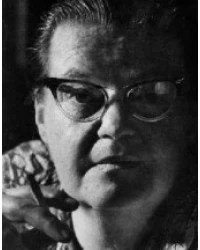
K: That was very nice of you. I don’t actually know all that much. That’s great. Yeah, I think a lot of people who are listening along maybe haven’t read Hill House before. When I usually teach Hill House, I always begin with this joke and I say, how many of you have heard of Shirley Jackson? And nobody raises their hands. Say how many of you have read “The Lottery?” And they all raise their hands. She really is somebody who has been remembered for one particular work, which, when she looked at her own work, maybe wouldn’t have been that big a deal to her. It did put her on the financial map. She was the breadwinner for her family. Hill House, I think [is] not my favorite of her novels, but probably the most tightly constructed. My favorite of her novels is The Sundial, which I’ll probably bring up again and again. Before we get started, I want to let the folks at home know where on the Web they can find us. Our website is the theheartofthehouse.blog. That’s where you can find the show notes for each episode, secondary sources, pictures and more. I’m going to try very, very hard to keep the sources that I reference non academic, just so that nobody gets pay walled when they try to take a look at them. If you’re interested in reading more about Jackson’s life, the two sources that we will be consistently referencing, and that I would recommend to absolutely everyone, whether they are a Jackson fan or not, is Ruth Franklin’s 2016 biography. It’s called A Rather Haunted Life, and the recently released, I think 2020 or 2021 Letters of Shirley Jackson. And those really give us a glimpse as to what her voice sounded like when she was writing to her husband, when she was writing to her parents, when she was writing to her children. Hopefully we can read from a couple of those as we go on, because they’re awesome. So just a bit of background on who she was. Shirley Jackson, born December 14, 1916 in California. She lived most of her life in a small town in New England, which is the inspiration for “The Lottery” and really a lot of the social elements of her fiction. There are always mean girls in the Shirley Jackson universe, and we’re going to see some of them today. She was known for blending scenes of horror with the domestic sphere. One of the blurbs on one of her volumes, I think it was, Let Me Tell You, which we’ll talk about in just a minute is, “An uncanny dollhouse, everything perfect but something deliciously not quite right.” That really is the best way I can think of to describe Shirley Jackson. Aside from Hill House, Her most famous works of course are “The Lottery” and We have Always Lived in The Castle, which was the novel that came after Hill House. In addition to being a writer, she was a mother of four, wife to Stanley Hyman, who was a literary critic and professor up at Bennington College in Vermont. Rather than droning on ad infinitum, though, I think the best way to give you a sense of who Jackson was, really is to just let her speak for herself. Mckenzie is going to read for us a piece Jackson wrote called “The Real Me”, which was published posthumously in a collection called Let Me Tell You, I think in 2016. Mckenzie, take it Away.
MK: “The Real Me” by Shirley Jackson. “I am tired of writing dainty little biographical things that pretend that I am a trim little housewife in a Mother Hubbard stirring up appetizing messes over a wood stove. I live in a dank old place with a ghost that stomps around in the attic room we’ve never gone into. I think it’s walled up. The first thing I did when we moved in was to make charms in black cran on the door sills and window ledges to keep out demons, and was successful in the main. There are mushrooms growing in the cellar and a number of marble mantles that have an unexplained habit of falling down onto the heads of the neighbors’ children. At the full of the moon, I can be seen out in the backyard digging for mandrakes, of which we have a little patch with our rhubarb and blackberries. I do not usually care for those herbal or bat wing recipes because you can never be sure how they will turn out. I rely almost entirely on image and number magic. My most interesting experience was with a young woman who offended me and who subsequently fell down an elevator shaft and broke all the bones in her body except one, and I didn’t know that one was there.”
K: Okay, I love that piece. Thoughts about Shirley’s voice and how she chooses to describe herself?
MK: I mean, she’s funny, right? I think especially the final moment of the woman falling down an elevator shaft. I think reading that, I feel like I don’t know whether seriously or not, which is a fun reading experience, is trying to assess that.
K: Yeah, Something that doesn’t come out really in Hill House is Shirley is very funny. Shirley can also be very mean, however she did in her lifetime, really financially lean into speculation that she herself was a witch. I forget which book, it was basically on the flap of the cover. The information about her described her as a practicing witch. She also loved to tell the story of Alfred Knopf, who was her publisher, went skiing and broke his leg. The story went around that she had made him break his leg, which of course she knew she didn’t do. But she didn’t stop people from saying that. She leaned very much into her witchiness. And she’s also just really, really funny. The Haunting of Hill House was published in 19… 1959. This was towards the end of her career, actually since she died when she was only 48. Before we get into the text itself, I want to give a spoiler policy because I know sometimes people can get bitchy about this stuff. Mckenzie is reading in real time. Hopefully the folks at home are reading in real time. I’m going to do my best not to spoil anything that happens outside the domain of whatever reading we’re doing for this episode. At some point, I will post on the blog a list of the chunks that we are going to be covering. However, we are going to discuss in detail whatever happens in the designated pages for the day. If you have not read up to page 23, there will be spoilers. Although nothing, all that spoilery happens in the beginning. Okay. So without further ado, let us get into the text of The Haunting of Hill House. Mckenzie, can you read us the first paragraph, please?
Mckenzie reads from page 1.
K: Okay, thoughts?
MK: Well, I think that first sentence is just such an achievement. I think particularly that use of the word organism, right, brings to mind a more natural world phenomenon. And then to pair that with the conditions of absolute reality and the idea of dreaming and the idea of each person’s reality as constructed. It’s this very fun tension between the natural world and constructed experience that is Hill House itself.
K: Now, we are not actually entering Hill House today. We will end today’s reading on the doorstep. Today we’re going to cover a lot of who is in Hill House. There are four people. Let’s take a look at who is in this house. Mckenzie, whose idea was it to get this whole thing together? In fact, what is he trying to do?
MK:I didn’t know there would be a reading quiz.
K: I’m sorry.
MK: Dr. John Montague?
K: Dr. Montague, doctor of philosophy. I love this description of him. The analysis of supernatural manifestations is true vocation. He’s scrupulous about the use of his title because, “his investigations being so utterly unscientific, he hoped to borrow an air of respectability, even scholarly authority, from his education.” Dr. Montague is the guy who will not let you call him anything other than doctor. He is desperate to get legitness in his field. Do you remember why he’s renting Hill House?
MK: Because he thinks that it is haunted. He’s going to make a lot of money from his writing.
K: Yeah, Dr. Montague is here for money. He wants to get a gang of ghost hunters together in the 1950s in Hill House to prove the existence of ghosts. We’ll see how it goes for him. How do you think it’s going to go?
MK: I have no idea, to be honest, again, The Haunting of Hill House, but I have no idea of the actual plot. And I think it’s wonderful so far. I admire someone who sends out ten letters with this crazy scheme and then gets two people and is like, yeah, let’s do it. Also note that I will also be insisting everyone call me doctor. When I get my PhD, just be on the lookout for that.
K: Check back in 20…?
MK: 2026.
K: Yeah, Mckenzie will be a doctor in 2026. I will be a doctor in 2027. As my psychiatrist told me, most people don’t make it because it crushes them before they can get a PhD. Dr. Wen, if you’re listening, thanks. I appreciated that. So Dr. Montague is getting this gang together. Let’s talk about who he pulls together. We have Luke. Luke is a liar, he’s also a thief. This is on page 5-6 of the Penguin version. ”His aunt, who was the owner of Hill House, was fond of pointing out that her nephew had the best education, the best clothes, the best taste, and the worst companions of anyone she had ever known. She would have leaped at any chance to put him safely away for a few weeks.” Luke is the on paper heir to Hill House. Can you talk a little bit about what inheritance means in the Gothic?
MK: Yes. The first Gothic novel is The Castle of Otranto by Horace Walpole. Long story short, he writes this fake preface to it that explains what the Gothic as genre is going to be, which is pretty cool. Not a lot of genres have a firm beginning like that, that the premise of the novel and of the genre is that the sins of the father get returned onto future generations over and over and over again. Which is why haunting is so important to me. That’s what’s interesting. What, either culturally or familiarly, can’t we let go of? What continues to be present even when there’s embodied absence? Being the heir not only means inheriting a house or a place, or a name or a fortune, but it also means inheriting secrets. Inheriting trauma, perhaps inheriting guilt. What haunts a person is always based on what they inherit and what continues to haunt them is based on what they can face about that inheritance.
K: How do you think Luke feels about all of that very deep psychological analysis?
MK: I think he’s just…I don’t think he cares. I think, “I’m rich and that’s great.” This is my impression of him, “also, and I love being rich. And I’m just gonna vibe.”
K: Our third and most important secondary character is, of course, Theodora. Theodora is an artist. Like Luke., she is quite rich, although she does have a roommate. This is how Shirley describes Theodora. “Her world was one of delight and soft colors, and she had come onto Dr. Montague’s list because she had somehow been able to identify correctly 18 cards out of 20, 19, cards out of 20 held up by an assistant, out of sight and hearing.” One of the things that I want us to keep in mind as we move forward with Theodora, is she really psychic? Can she anticipate what’s about to happen? There are times when it seems like she can. There are times when it seems like she can’t. Theo will be our most important secondary character. The other thing to take into consideration with Theodora, she has a roommate. So Mckenzie, did you have roommates when you lived in Queens?
MK: I did. I had one roommate.
K: Did she make a little figurine of you?
MK: Unfortunately no. I received no such figurine.
K: Okay, so this is a very queer novel, which we’re going to continue to talk about. It was written in a time when queer literature had to be underground. In fact, Shirley herself said a really lot of problematic things about lesbians, which doesn’t really square with the book she wrote. I don’t know if she herself realized how gay it is, although she must have. Theodora has a friend whom she lives with. Right before Theodora is supposed to come to Hill House, they got in a fight. This is on page five of the Penguin edition. “Theodora had deliberately and heartlessly smashed the lovely little figurine her friend had carved of her. And her friend had cruelly ripped to shreds the volume of Alfred De Musset which had been a birthday present from Theodora, taking particular pains with the page which bore Theodora’s loving, teasing inscription”. I had always just glossed over this, but this time around I looked up Alfred De Musset. I am not a romanticist at all. I also don’t particularly care about French literature. I had never heard of him. He was a French romantic writer. He was the lover of George Sand, who was a famous 19th century non binary figure. She enjoyed dressing up as a man. The last thing mentioned in his Wikipedia article is that he is believed to have written Gamiani, or Two Nights of Excess, published in 1833, which is a lesbian erotic novel believed to be modeled on George Sand. I do think Shirley probably had that in mind as she was writing for somebody in 2023 to pick up on. Thank you, Shirley. Any thoughts or comments about Theodora and her roommate?
MK: I did send Kelly when I read that part [the Vine that says] “and they were roommates.” I think anytime you’re reading, especially 20th century literature, and you see “roommate”, like you said, so much of it is coded that you kind of jump there. And I think especially given the intimacy of the gifts and again, the “loving teasing inscription” which could both be sexual as well right? I think that immediately springs to mind. Kelly’s research just solidifies that reading.
K: Yeah, it’s not my research. I went on Wikipedia. Theodora is our glamorous, sparkling character. I think…in fact, as soon as she’s announced, Jackson says she could not…. Yeah, “she was not at all like Eleanor. Duty and conscience were for Theodora attributes which belong properly to Girl Scouts.” That’s a nice segue to move to meet Eleanor. Mckenzie, can you read us the paragraph on page three? It’s a bit of a long one and so we thank you.
MK: Yes, here we go.
Mckenzie reads from page 3
K: Okay, thoughts about that experience of reading it ?
MK: The first couple sentences of the paragraph are so quick and precise. “Eleanor Vance was 32 years old when she came to Hill House. The only person in the world she hated now that her mother was dead was her sister.”. And then as the weirdness starts to come, the sentences start becoming quite windy and shifty. Notice that I’m trying to catch my breath to get the different clauses in. Just that idea of simple facts opening up to reveal twisty messiness feels apparent in the sentence construction as well as the content.
K: Yeah, that’s something I hadn’t noticed. My favorite sentence in the novel is not for a while. It is because of how it’s constructed, which I know is not the most thrilling thing, but we’ll talk about it when we get there. It’s not for probably three or four more episodes. Eleanor is 32. How old would you say she is mentally?
MK: I think she’s both 16 and 100.
K: Why is she 100?
MK:I feel a world weariness. I think later in the passage, she starts to experience some delight [which is] more associated with being young and hopeful. That idea of never being actually happy and becoming reserved with no one, I don’t know, I feel like it’s really tragic. She’s given up before she started.
K: Yeah. What’s Eleanor’s problem, or who is her problem?
MK: Well, it was her mom, and then now it is her sister and her brother in law.
K: So we’re not going to talk too much about Eleanor’s sister and brother in law, but can you give us just a brief synopsis of what they get really angry about?
MK: Well, they suck. I guess they co-own a car, the two sisters. And then Eleanor’s like, “I’m going to take a car to go to Hill House.” She’s like, “I’m gonna take the car to go meet with this guy and they’re like, ‘Heck no, you’re not. What if we should need it? And there’s a sinister joy they’re taking in the deprivation.
K: When Eleanor does go to Hill House, she steals the car. She has this childish glee like, “ha ha, I’ve got you Carrie,” who is her sister. Let’s talk about the rocks. What’s the deal with the rocks on the house?
MK: I have no clue. I guess part of what I’m noticing, I think stuff about haunting can either be quite whimsical and almost [like a] fairytale, this does not feel like that. The stones in the ceiling and the people just coming and then never figuring out what happened feels like the opposite of that. It’s…there’s a darkness to it. There’s a monotony that it’s stones on the ceiling. I’m not quite sure what to make of it.
K: I don’t know what to make of it either. One thing I want to point out is that it is somewhat like “The Lottery” in which rocks are bad. Eleanor is 12 when the rocks start falling on her house. She’s also just lost her father. What else tends to happen when a girl is around 12?
MK: She gets her period?
K: Yeah. Puberty. Any thoughts about that?
MK: The eggs are dropping?
K: Oh, I never thought of it like that. No. Oh my God. [laughter] No, I didn’t. My God. We’ll come back to that. No, we’re going to leave that. I just wanted to flag that. And the fact that Eleanor’s mother thinks that the neighbors are doing this because they hate her so much tells us a lot about what we need to know about Eleanor’s mother. She’s dead, but is she? One of my jokes with my students is, whenever you have a sentence that says “Why does Eleanor…” or , “Why is Eleanor…”, the answer is always her mother. One of the things that we’re going to see for Eleanor is that her mother, even though she is dead, may as well not be. Not only because her sister acts like her mother, but because she is such a massive presence in her life. We begin with Eleanor stealing the car, or stealing half of the car. Driving is a really consistent metaphor for Jackson, particularly as it relates to women. She has lots of stories about driving. When she died, she was working on a novel called Come Along With Me, and the main character of that was Angela Motorman. Not exactly subtle. Eleanor is driving from Hill House, or driving to Hill House rather. Do you remember what happens as she starts?
MK: It’s an old woman carrying groceries…or [Eleanor] thinks she’s carrying groceries and then she bumps into her and they fall and she tries to pay her back. But the old woman is like, “Oh, I didn’t buy these. They were given to me.” It’s weird, you can’t take money for what was charitable. I feel much better about the reading quizzes as we go. [laughter]
K: I don’t know what the deal is with this old lady. Do you have any thoughts?
MK: I mean, I guess not knowing whether she comes back or not… Okay. There’s this weird idea of giving and taking and breaking, right? This idea of, you cause harm but then the thing was given to you and unpaid for. So there’s weird…I guess you could link it to the inheritance, because how do you pay for something when you didn’t buy it?
K:I don’t know if any of you have any thoughts on the old lady. Please let us know because as you can hear, we don’t have many. However, something jumped out at me on this reading and I could not believe I had never noticed it before. Do you notice which word is constantly used in reference to the old lady?
MK: No.
K: She’s always described as little. She’s a little old lady. She holds out her little hand. Little, little. And once I saw that, I could not unsee it. In fact, as I continue along about the little candies and the little paper dishes, and the little old lady smiling wickedly. Even as Eleanor continues this word “little” appears again and again and again. And so I did a command F for the entire text of The Haunting of Hill House. Do you want to take a guess how many times the word “little” is in there?
MK: 30?
K: 215 times.
MK: You’re kidding.
K: “Little” is in the haunting of Hill House 215 times, which is also the exact number of times as the phrase “Hill House” appears. I don’t mean to say that there’s any connection there, that’s just to show how inextricable from this book littleness is.
MK: That’s shocking. Well, that’s cool.
K: Yeah, I don’t think she did it on purpose. As I said, I looked up how many times “Eleanor” is in there and it’s like six something.
MK: I like the idea that she was like, “I know that I want ‘little’ to be in there the same amount as ‘Hill House’.” And then she commanded F and she was like ten ‘littles’ short. Then she added the scene on her typewriter.
K: Yeah. Yeah, there’s no Command F for Shirley Jackson. I have a feeling now if I look at the rest of Shirley’s work, the word will be there too. But who knows? Just before the lady pulls away, she says, “I’ll be praying for you, dearie,” and that’s going to come back.
MK: Can I just say? “I’ll be praying for you.” Depending on who it’s said by and how it’s given can either be the nicest thing in the world, or the most sinister.
K: How does it feel when this lady says it?
MK: Well, I think, I think you read the “smiling wickedly,” just the tenor of the book… I’m like, “Uh oh, I don’t want this praying,” but I do think when someone very sincere says it to you, I think it can be super sweet, but that is not the vibe that this woman is giving.
K: Yeah. When Eleanor first knocks her down, she says, “Damn you.” There’s going to be a lot of hell imagery as we continue. Maybe this old lady is the ferryman, I don’t know. That is the extent of my knowledge of Greek mythology. Moving right along, I want to take a look at the beginning of Eleanor’s drive after she finally gets in the car. “It was the first genuinely shining day of summer, a time of year which brought Eleanor always to aching memories of her early childhood when it had seemed to be summer all the time. She could not remember a winter before her father’s death on a cold, wet day.” That’s the beginning of Eleanor’s journey to Hill House. I wanted to flag it because it reminds me a lot of the beginning of” The Lottery”. The beginning of “The Lottery” reads, “The morning of June 27 was clear and sunny with the fresh warmth of a full summer day. The flowers were blossoming profusely and the grass was richly green.” So, Shirley loves to do this thing where we have this perfect setting, pastoral setting, but something is not quite right. I should have mentioned earlier, “The Lottery” was 1948. Hill House is about ten years after. June 27 is Lottery Day. Every year on June 27, I text my friends, “You rock.” Do you get it?
MK: I get it. I think it’s funny.
K: June 27 is Lottery Day. Eleanor comes to Hill House on June 21. Do you know what the significance of June 21 is?
MK: Is it the solstice?
K:It is the solstice. Yeah. There is something about witchiness and Wicca. One of the most common questions that I get when I used to teach this book is, “Why does she just not start in Hill House? Why do we need this scene of Eleanor driving there?” Do you have any thoughts?
MK: I mean, there’s the tension of getting there, especially for me who, again, somehow did not know anything about the plot. I want to get there and I want to see what’s going on. We really haven’t spent much time with any of the other characters we have. This long stretch of Eleanor naturally builds the suspense. I think again, there’s something to this idea of driving through a sunny, beautiful day and then the world gets more and more eerie. She goes to the rest …and then there’s the weird…but she doesn’t see the house, but she sees the plants, right?
K: Yeah.
MK: She’s imagining these other lives. And then she finally goes to the diner and has this incredibly unsettling experience. There’s this building of almost grossness. That’s eerie in terms of how the audience is affected. And then we’re not there yet, building up that last line, that idea of “We felt the disease coming and now we’re here.”
K: Yeah, I wasn’t going to talk about the scene with the diner, but you brought it up. Now I get to show one of my favorite details. Hillsdale is the town that Hill House is part of. “People don’t go there. People leave this town,” as they tell Eleanor. When she gets there, she says, “I will not spend long in Hillsdale,’ she thought, looking up and down the street, which managed, even in the sunlight, to be dark and ugly. A dog slept uneasily in the shade against a wall. A woman stood in a doorway across the street and looked at Eleanor and two young boys lounged against a fence, elaborately silent. Eleanor, who was afraid of strange dogs and jeering women and young hoodlums, went quickly into the diner.” I just love that because the boys and the lady and the dog aren’t doing anything aside from sitting there and looking at her. But in Eleanor’s head, it’s a strange dog, a jeering woman, and a young hoodlum. In some ways, I think Eleanor’s paranoia is scarier than the ghost stuff because she is very, very afraid of, “What if everybody hates me?” And spoiler alert. It’s going to get worse. But we’re not there yet. We’re not there yet. What Mckenzie is going to read from now for us, is an excerpt from an article which I will link in the show notes called “Garlic in Fiction.” Shirley published it in The New Yorker just after she had published Hill House. And she’s talking about the process of writing, and she has this idea of what she calls garlic in fiction, which is setting up a set of symbols around individual characters. Mckenzie will read for us from “Garlic in Fiction.”
MK: Ready? “My problem was to take Eleanor, a woman of 32, from her home in New York City to a haunted house 200 miles away. In the course of this journey, which begins the book, she was to be built up as a wholly sympathetic character, the main character in the book. She was to be shown as infinitely lonely and unhappy. At the same time, there had to be a transition for the reader from the sensible environment of the city to the somewhat less believable atmosphere of the haunted house. The reader had to be persuaded to identify sufficiently with Eleanor so that when later he encounters with her the various manifestations in the haunted house, he will be willing to suspend disbelief and go along with Eleanor because she’s become thoroughly believable. Now, the basic emphasis in the entire journey has been Eleanor’s longing for a home, for a place of her own. And of course, for a real cup of stars to break the spell of dullness and loneliness that she has always known. Five symbols have been set up. First there is a little old lady who is praying for Eleanor. Then the two stone lions, then the oleander bushes and roses. Then the white cat, then the cup of stars. Now you see the phrase,’ white cat’ is beginning to take on the meaning it needs for the book. Each of these cumulatively dovetails with the others. Each belongs absolutely to the journey between reality and unreality. And each must carry the weight of Eleanor’s loneliness and longing for a place where she belongs.”
K: Thoughts about “Garlic in Fiction?” It’s much longer than that. Those are just excerpts.
MK: Yeah, I guess I always find an author’s writing process to be really fascinating. Even knowing it’s untrue, I still believe this myth that it just comes out as the story.
K: Shirley did not have much time to write. She had to raise four children, although I think they were fairly grown up at the time she published Hill House. I got to the end of The Haunting of Hill House the first time, and I was like, well, that was…I’m not going to spoil how it ends. Do you have any ideas how it might end?
MK: No.
K: But now for it to be done, I just thought it was because I wasn’t reading carefully enough. All of Shirley’s writing has this really detached, frustratingly simplistic quality. And it wasn’t until I went back again with some more knowledge that I was able to see what it is that she’s managing to do here, which of course I now think is extraordinary. Eleanor’s garlic:, we’ve got the white cat, the cup of stars, which we’re going to talk about, stone lions and oleander. Where does Eleanor get all this stuff from her?
MK: From her drive?
K: Yeah. Can you give the folks at home a little bit of a rundown on what Eleanor’s thinking about as she drives?
MK: Yes. Okay. So she kind of has these moments where she imagines other lives, right? So she sees the two lions and she’s like, “I imagined coming out to clean them and kind of sitting on my porch and l living my life and dying there.” Right? Is that right? And she kind of imagines different futures, different avenues. But it’s more whimsical than just thinking about other lives. Thinking of potential of spaces, I guess. Potential of objects to kind of create lives around them.
K: I want to read one passage that Eleanor thinks about. Something that just jumped out at me as I opened my book, is a quote on Page 11. Eleanor is thinking about pulling over and just stopping somewhere. “She might pull her car to the side of the highway, although that was not allowed. She told herself she would be punished if she really did.” That jumped out at me, this reading. I just love the image of Eleanor as a rules person, and she is very much a rules person. Do you want to guess who made her that way? There’s a scene later on in the book where the characters get up from breakfast. Eleanor says, oh, “Mother would be so mad if I didn’t clean the table.”
MK: Also, there’s something funny about… she’s having this time where she’s like, “I’m having a delightful time driving.” But it’s more like she’s created the structure where she is free and she’s like, “What would a person do when embarking on a new adventure? Oh, they’d have a wonderful drive.” Yeah, it’s like she is experiencing a kind of joy and delight, but it’s also within these expectations and this kind of purposeful joy.
K: Yeah, I want to talk about the kind of joy she imagines for herself. This is on page 13, she sees a row of Oleander. Do you know what happens to you if you eat an Oleander?
MK: No. What happens?
K: Take a guess.
MK: You die.
K: Yeah. Oleander are poisonous.
Kelly reads from page 13.
Thoughts about that?
MK: Mommy issues.
K: There will never be anything that has to do with Eleanor that does not relate to her mommy issues. She imagines this fantasy of the prodigal daughter. What does this fantasy remind you of? What does it sound like?
MK: It is a fairy tale.
K: Yeah. Sleeping Beauty, they’re waking up, right? The reason that I bring that up is because can you remind us how old Eleanor is?
MK: 32?
K: Yeah, she’s 32. How old are you?
MK: I’m 27
K: And I’m 30. However, that is not what my perfect life looks like.
MK: No. I’m stuck on one of the last lines where she goes “because the enchantment is ended.” When both in terms of that specific story, stumbling upon that world would mean the other meaning of enchantment would begin. But also she’s on this road where she thinks she’s finally taking a step forward. It’s that idea of enchantment. I just think that is interesting. She’s already skipped to the happy ending of the story where things are just going to go back to the normal of that world. Yeah. When she’s actually interested in doing different things or she thinks that she is at least.
K: Yeah. Let’s pause here and talk about Eleanor a little bit. Would you like to be her friend?
MK: No.
K: [laughter]
MK: Right. Like, I’m not going to pretend to be fake on this podcast,
K: That’s so mean! You wouldn’t want to be her friend?
MK: I think… someone who has never been happy in their adult life…that’s pretty intense.
K: Can you guess or maybe infer what Eleanor will be like once she gets around people her own age?
MK: Weird? Weird, and mean?
K: She can be very mean, specifically to one particular character whom we’ll talk about. I have more sympathy for Eleanor. I don’t know if that says I’m like her. I certainly have sympathy for her. Yeah. So there are certain things about her that I don’t have much patience for, being 32 years old and having a fantasy of being a princess. But I don’t know. I –
MK: Would you be her friend?
K: Yes, at this point, yes. Later on in the novel, we can return to that. Poor Eleanor.
MK: I guess I’ll share what I like about Eleanor. I do like that she got the letter and she was like, “Fuck it. Let’s do it.”. Yeah, I do think that in my adult life, I admire people who do stuff, as simple as that sounds. So I think that’s pretty cool for her. I love when she stole the car, it’s like yes, get them. Eleanor. Would I want to be at that diner getting coffee with her? No, I can’t say that I would.
K: One thing that I never really mentioned when I teach this to students because it can get a little bit awkward…. Do you remember? It’s very, very coded what Eleanor’s sister thinks Dr. Montague is trying to do.
MK: To get her? Or to do experiments on her?
K: She says something like, “Maybe this is one of those places where they take women for… well, you know.” Like trafficker maybe or just like a weird sex thing. I think also because Carrie, who’s Eleanor’s sister and her husband are sitting in their marital bed when they have that conversation. There is this idea that Eleanor, who’s 32, is … her virgin ears. She never says, oh, “I will meet a handsome prince.” And when she does, there’s a very specific punctuation which we’ll return to. But we need to get to the infamous cup of stars. So had you heard of the cup of stars before you read this?
MK: I don’t think so. But it is such an evocative symbol that I guess I felt like I had even if I hadn’t.
K: All right, So Eleanor is on her way to Hill House and she’s in this nice little restaurant, and that’s where the Cup of Star scene begins. “The only other people in the dining room were a family party., Once the little girl turned and regarded Eleanor with frank curiosity, and after a minute smiled. The lights from the stream below touched the ceiling in the polished tables and glanced along the little girl’s curls. And the little girl’s mother said, “She wants her cup of stars. It has stars in the bottom. She always drinks her milk from it at home. She calls it her cup of stars because she can see the stars when she drinks her milk. You’ll have your milk from your cup of stars tonight when we get home. But just for now, just to be a very good little girl, will you take a little milk from this glass? ‘Don’t do it,’ Eleanor told a little girl, ‘insist on your cup of stars. Once they have trapped you into being like everyone else, you will never see your cup of stars again’”
K: Okay. Thoughts?
MK: It’s just such obvious projection. I think Eleanor thinks that everyone feels like they are totally alone and conforming to a life they don’t want. Which is a little bit true for most people, right? Most people are like, “Oh, I used to be really into this when I was a kid and then I wasn’t good at it so I stopped doing it,” right? There’s a little bit of that. But yeah, I think her being… this is a symbol of adult sadness and loneliness and mediocrity. And I think it’s just so clear that she is desperate for change, is desperate for hope, is perhaps desperate to feel like a child again, like the path before her is infinite.
K: Yeah, the tagline “Insist on your cup of Stars.” That’s the quote that gets put on all the merch.
MK: I get why. It’s like the Disney, right?. It fits a basic idea of “Insist on an extraordinary life.” But I think again, it’s quite juvenile. Your point about you can’t respect a 32 year old woman fantasizing about being a princess.
K: The little girl herself is celestial, right? The sun glances off her curls, the kid herself is sparkly. Yeah, I do think that you cannot remove this quote from the context because it has become like, “Oh, be yourself,” and it’s just pithy. Is it a great line of literature? Yes, but do I think it has taken on meaning that it should not have? Yes. I myself have cup of stars merch. That does not mean I don’t like it. But yeah, not everybody should have a cup of Stars. I don’t know, do you have a Cup of stars?
MK: I think that’s my problem with it. Right. Cup of Stars, goal. Because I have goals. I have dreams. I have crazy dreams, right? I think the world in some ways does make you conform. It’s hopelessness that she has. She’s even… that she’s taking this again, this cool adventurous step away from her life that she hates. It’s still the admission that she thinks that she can’t have goals anymore and that once this adventure is over, she’s just going to go back again. I don’t want to be like, “Everyone has the same 24 hours in a day.”
K: Are you life coaching Eleanor?
MK: No, but it’s just… again, I think she’s 32. I get that she had a hard life, but I think the view of the world as solely out to get you… again, that’s why she feels 16 is like, “Oh, I’ve been made to conform.” Yeah. And that’s a normal 16 year old feeling. And maybe that’s part of it is that she’s stunted from having to be this caregiver for so long.
K: One detail that I didn’t notice last time is Eleanor’s been caring for her mother for 11 years. So she was presumably 21 when her mother died. So I don’t know what to make of that. Presumably, she had some time to be a teenager. Yeah, moving right along. Poor Eleanor. In one of the earlier drafts of Hill House, Eleanor’s name was Erica. When do you think of that?
MK: I think Eleanor’s perfect.
K: Yeah, I don’t like Erica as much. Yeah, I have a friend named Erika. If you’re listening to this, that was not about you, but yeah, Eleanor is perfect for reasons that I can’t really articulate, but it feels perfect. So we’ve got the Cup of Stars, and as soon as Eleanor exits the diner, that’s when we get the first refrain of this little ditty that plays through Eleanor’s head the entire novel. “Journey’s End,” she thought and far back in her mind, sparkling like the little stream, a tag end of a tune danced through her head, bringing distantly a little word or so “In delay there lies no plenty,”she thought. “In delay, there lies no plenty”. We were talking about this a little bit earlier. You guessed that it was Shakespeare. Can you tell everyone what play it is?
MK: Twelfth Night?
K: Yeah, it’s The Twelfth Night. I’ve actually never read Twelfth Night, but I know a brief summary. The only reason I know is because it’s what She’s the Man was based on. So there’s a lot of gender swapping, a lot of mistaken identity. Also— fun thing I learned, 12th night refers to the 12th night of Christmas, which is the night before my birthday, January 5. And that was a time of inversion, of topsy turviness. I was born on the Feast of Fools, which is prophetic. There’s also the Feast of the Ass, which is not my birthday. But that it were.
MK: I guess I’m stuck on the “Journey’s end lovers meeting.” Just because, again, I feel like I didn’t necessarily pay attention to it the first reading, but the fairy tale and the journey ends when she’s reunited with her mother. Yeah, it’s the idea that that’s the most significant love story of her life, and it’s obviously very messy and very sad.
K: This comes up again right before Eleanor first sees Hill House. And the way she describes it, she says, oh, this is not an appropriate thing for me to be singing as I approach Hill House. Eleanor has a very juvenile idea of romance, and we’re actually going to talk about that in just a few minutes as we get our first glimpse of Hill House. It’s very cinematic as she creeps up the hill to Hill House. The trees are oppressive, it’s very dark. I want Mckenzie to read for us a brief passage from another one of Shirley’s writings called “About the End of the World.” Shirley is remembered as a writer of houses. She wasn’t always like that. You’ll see what I mean in just a minute. Mckenzie, can you please read for us what I have marked for you from “About the End of the World?”
MK: “Prominent in every book ever written with a little symbolic set that I think of as a heaven wall gate arrangement. In every book I’ve ever written, and indeed in the several outlines and rough sketches in my bottom desk drawer, I find a wall surrounding some forbidden lovely secret. And in this wall a gate that cannot be passed. I’m not going to attempt to analyze the set of images. My unconscious has been quiet for a good many years and I think I’m going to keep it that way. But I found it odd that in seven books I had never succeeded in getting through the gate and inside the wall.”
K: Okay. Does that remind you of anything that Eleanor goes through in these pages?
MK: I mean, the gate. The literal gate. Right?
K: Yeah. What happens at the gate of Hill House?
MK: There’s a nasty fellow
K:Yeah.
MK: [Who says] “You aren’t expected today.” And then she’s like, “yes, I am”. And then he’s like, “Don’t say I didn’t warn you.”
K: So Dudley is straight from central casting. He is the guy who says, “Don’t say I didn’t warn you, you’re going to be sorry I opened the gate,” and Eleanor has this whole internal struggle. “Do I insist? Do I just say okay and go home?” One thing that she says that’s always sort of really touched me is, “She was going to lose her temper, but she never did for fear of being ineffective.” I think that’s so sad, don’t you?
MK: That is sad.
K: Dudley does open the gate. Eleanor does get her glimpse of Hill House. So our second to last passage for the day Mckenzie. Can you read the paragraph on page 23 where we first meet Hill House? “Over the trees…”
Mckenzie reads from page 23.
K: Yeah. Okay. A lot going on here. I noticed you emphasize the word Gothic.
MK: Yeah. Right. Because it’s obviously drawing on that history of this house that is in a Gothic style. But also has these underground passageways, towers, the obvious personification of a family or a social structure that is plagued by secrets and murkiness.
K: Now let’s talk about that dot dot dot at the end. Why does it end with an ellipsis?
MK: She’s too nervous to have a sexy thought? I don’t know.
K: This was pointed out to me by one of my students, actually, because I was up in front of the class talking about how Eleanor never thinks about men and she never thinks about romantic partners. One of my students raised her hand and said, “Yes, she does, she does it on this and this page.” I looked at where the student was pointing and I realized that yes, Eleanor does indeed think about men. However, whenever she’s thinking about men, her thoughts end in dot dot dot. I don’t think that Eleanor has had much of a romantic life. If she does, she certainly does not tell us about it. And I think that with the ellipsis, it’s representative of something that Eleanor just does not have language for. She does not know what happens after the princess meets the smuggler. Her conception of that ends at the end of the fairy tale.
MK: You can also get back to that passage we read from Shirley Jackson’s writings. The Gate and the lovely little secret in the middle, Self imposed. Yeah. And the conflicts that our internal selves conjure to keep us from maybe the things we really want. But if we were to access them, we’d lose that excitement of not accessing them.
K: I don’t want to get too far ahead. But you will see this pretty much as soon as you start reading the next section. Hill House is essentially a giant womb. It is very Yonic. I like that word.
MK: What does that mean?
K: It’s the opposite of phallic.
MK: Oh, very nice.
K: Yeah. Cave… womblike, there are circles everywhere. There’s an article about this that I will link in show notes for a future episode. But yeah. So in terms of what Hill House looks like, we’re going to get to know it much more intimately. Shirley had a couple of postcards that people sent her that she based Hill House on. I’ll see if I can track any of them down and they’ll be in the show notes. I mentioned Horace Walpole earlier. Do you remember the house he built and what it looked like?
MK: Oh God, it was Strawberry something.
K: Is it Strawberry Hill?
MK: I think so. Basically… I’m trying to think of the right word. It was like camp for architecture. He was like, “Wouldn’t it be so funny if I made this old fashioned Gothic house and people would come and he would fill it with all this weird stuff?”
K: I just remember that it was hideous.
MK: I think what’s interesting about it, at least for me, is that when I think about old houses, I don’t necessarily… I’m not great at separating what’s normal for each architectural period. Having studied it just a little bit, he modeled it on these Gothic styles that were not the style of the ages. Now being like, I’m going to build an old timey Victorian house and fill it with a bunch of Victorian cliches. Yeah, it’s just funny.
K: It’s called Strawberry Hill and it’s very ugly. It’s white. I’ll post a picture. Horace Walpole’s dead. So I could say that. Okay, and Mckenzie, can you read that final last little bit for us, Eleanor’s reaction to Hill House?
MK: Yes, it’s very good.
K: Starting with “the house was vile.”
MK: “The house was vile. She shivered and thought, the words coming freely into her mind, ‘Hill House is vile. It is diseased. Get away from here at once.” It’s a great ending. Honestly, it’d be a great short story, just the piece we read. Because I think the first sentence is brilliant and the last sentence is brilliant.
K: If you think the beginning is brilliant, you may want to look at the end. Spoiler alert. The beginning and end paragraphs are the same. It doesn’t spoil anything that happens. But that paragraph is repeated [as the] last paragraph of the book. Yeah. Now, it’s interesting that you mentioned it would make a good short story. In fact, there is a short story of Shirley’s. I’m blanking on it. It’s a long short story, but it is essentially a proto Hill House. There are things in it that did not make the final novel. I don’t remember the name of it, but I’ll have it for you folks next episode. Thoughts so far on The Haunting of Hill House?
Mk: I like it, I think it’s wonderful. Again, the first sentence and the last sentence that we read for today are just small wonders. I’m excited to get to know our other characters. Honestly, I feel like it’s definitely an interesting narrative technique to introduce us to these four characters and then say, we’re going to spend the next 15 pages with just one of them. I hope Eleanor is okay. I feel like she probably won’t be.
K: But yeah, we’re leaving you on the doorstep of Hill House. We will be entering Hill House next time if you’re reading along at home. The version that we’re working out of is the Penguin edition that will take you up to page 66, but otherwise it’s Chapters 2.3. The reason why I’m not doing just regular chapters is because after the next episode, the next one breaks in the middle of a chapter. This is a book where things happen inconsistently. There will be a lot crammed into these 20 pages. As we saw in the next 40 pages, there’s not quite as much, but we do meet all the characters, and we do learn the history of Hill House, which is as important as what’s going on now. Have you seen any Hill House film adaptations?
MK: I only know Victoria Pettis. Have you seen it? What’s her name is in it because I think she’s very beautiful.
K: Do you know who she plays?
MK: No.
K: Is it Theodora?
MK: No, I don’t know. I haven’t seen it. I’m interested in them because they also did Bly Manner. Which is Turn of the Screw. Which I actually don’t care for that much, but I just read it so much that I’m like “What are they doing with it.?”
K: I refused to watch the Netflix Hill House just because there’s a character named Shirley. Luke, Eleanor and Theodora are all in it. Yeah, I can’t speak… they’re all siblings though, and it’s modern. This is just from what people have told me. But yeah, it’s not what Shirley wrote. Having now done some study and adaptation theory, I am sliding off my high horse just a little bit, but I am still very anti Netflix Haunting of Hill House. Okay, final thoughts?
MK: I think it’s great. It’s brilliant. I’m glad I’m finally reading it. I think… my personality is such that I love spoilers. I will chase spoilers for anything with no guilt at all. But I also spoil things after we stop and try to restrain myself because I don’t really get to do this that often. As a PhD student, we’re often reading things very quickly over a week and then leaving them behind. I really feel like this is a special opportunity. We’re going to try not to look it up, but that being said, I could come back next week and be like, “I read the Wikipedia.” Yeah. Having a great time. Glad to be here.
K: Maybe we can… at the end our Patreon only episode can be us getting drunk and watching the Netflix series.
MK: That would be very fun. I would genuinely do that.
K: All right. Well, thanks for coming along on our first foray folks. We really appreciate it. Once again, this has been The Heart of the House Podcast. If you’d like to see show notes or read more about our project, you can access theheartofthehouse.blog. If you’d like to get in contact, ask us questions, give us feedback you can reach me at kelly@theheartofthehouse.blog and I look forward to seeing your email.
 reading shirley jackson:the podcast